Hacking the Brain with Adversarial Images

Hacking the Brain with Adversarial Images

  • March 3, 2018
Table of Contents

Hacking the Brain with Adversarial Images

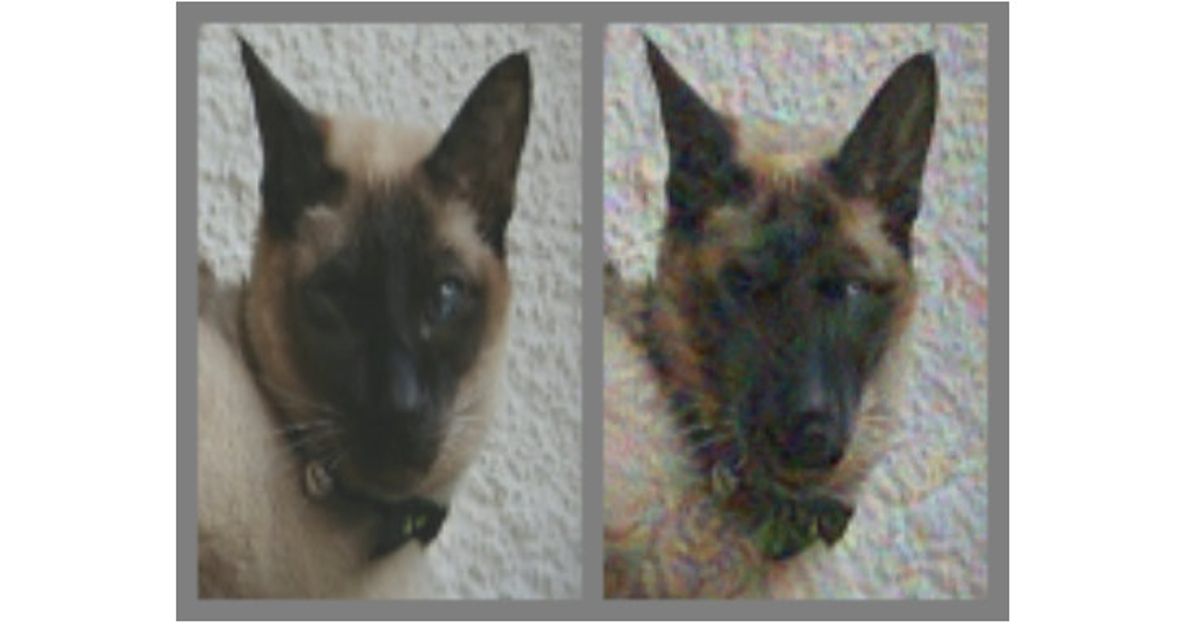
This is an example of what’s called an adversarial image: an image specifically designed to fool neural networks into making an incorrect determination about what they’re looking at. Researchers at Google Brain decided to try and figure out whether the same techniques that fool artificial neural networks can also fool the biological neural networks inside of our heads, by developing adversarial images capable of making both computers and humans think that they’re looking at something they aren’t.

Source: ieee.org
Share :
comments powered by Disqus

Related Posts

The Bayesian Probability Puzzle Solution

The Bayesian Probability Puzzle Solution

When making hard decisions, do you go with your gut or try to calculate the risks? In many cases going with your gut is fine, but the answers to our February puzzle problems show how explicit probabilistic thinking can outperform intuitive estimates. They also highlight the differences between situations where an intuitive approach succeeds and ones where it fails.

Read More
Seeing the brain’s electrical activity

Seeing the brain’s electrical activity

MIT researchers have come up with a new way to measure electrical activity in the brain. Their new light-sensitive protein can be embedded into neuron membranes, where it emits a fluorescent signal that indicates how much voltage a particular cell is experiencing. This could allow scientists to study how neurons behave, millisecond by millisecond, as the brain performs a particular function.

Read More
Can AI Ever Learn To Follow Its Gut?

Can AI Ever Learn To Follow Its Gut?

Academics, economists, and AI researchers often undervalue the role of intuition in science. Here’s why they’re wrong.

Read More