Vision-improving nanoparticle eyedrops could end the need for glasses

Vision-improving nanoparticle eyedrops could end the need for glasses

  • March 9, 2018
Table of Contents

Vision-improving nanoparticle eyedrops could end the need for glasses

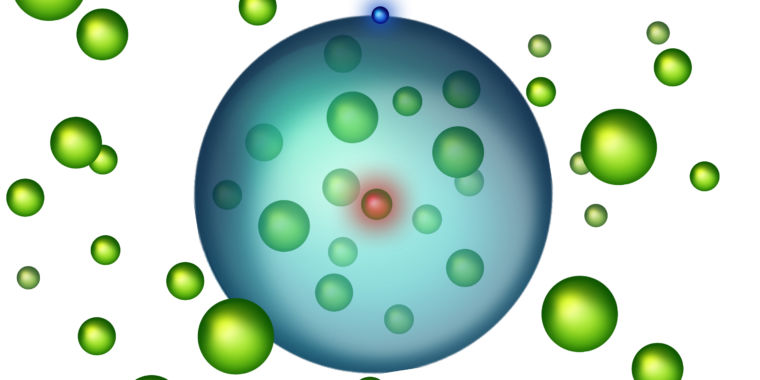
Could the development of eyesight-improving eyedrops help eliminate the need for glasses? Quite possibly, suggests new research coming out of Israel’s Shaare Zedek Medical Center and Bar-Ilan University. A team of ophthalmologists at these institutes have invented and tested “nanodrops” which, combined with a laser process, reportedly results in improvements in both short- and long-sightedness.

Clinical testing in humans is set to take place later in 2018.

Source: digitaltrends.com

Share :
comments powered by Disqus

Related Posts

The Building Blocks of Interpretability

The Building Blocks of Interpretability

Interpretability techniques are normally studied in isolation. We explore the powerful interfaces that arise when you combine them — and the rich structure of this combinatorial space.

Read More
Researchers Can ‘See’ Your Memories While You Sleep

Researchers Can ‘See’ Your Memories While You Sleep

New research published today by Cairney and his colleagues in Current Biology has made significant headway on this issue by linking sleep spindles—spontaneous bursts of brain activity—to memory processing in a sleeping brain. Incredibly, the researchers claim it is possible to determine the content of the memory being processed by analyzing this brain activity.

Read More
Nanowire arrays restore vision in blind mice

Nanowire arrays restore vision in blind mice

Retina is an important light-sensitive tissue that transduces light information into neural activities through multi-layers of neuronal cells. Light entering an eye passes through the transparent retina and is mostly captured by the visual pigment-containing photoreceptors. Retinal degenerative diseases such as retinitis pigmentosa and macular degeneration lead to irreversible damage or even loss of photoreceptors, which can result in serious impairment of vision and eventually blindness.

Read More