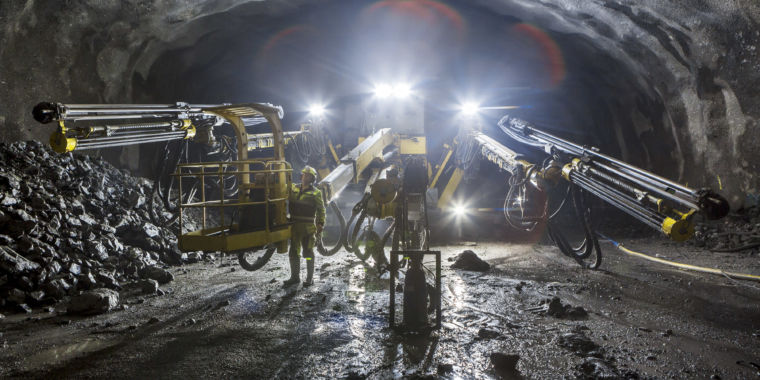
An inside look at how Sweden is building the world’s second-longest tunnel

An inside look at how Sweden is building the world’s second-longest tunnel

  • March 10, 2018
Table of Contents

An inside look at how Sweden is building the world’s second-longest tunnel

The solution settled upon involves taking nothing less than 18km (11 miles-plus) of the bypass underground, with twin tunnels running three lanes abreast in each direction. Comprised of three tunnel sections in total, the winning design means that the E4 bypass avoids six nature reserves or places of cultural significance, including grounds of Drottningholm Palace—a UNESCO world heritage site on the island of Lovö—and the need for bridges over the crystal waters of the Mälaren strait. Not for nothing either, E4 will be one of the largest underground highways in the world, with its longest tunnel section spanning 16km (nearly 10 miles) from the bypass’ southernmost point.

At its deepest, the highway will bottom out at 80m (close to 90 yards) below the surface of the Mälaren.

Source: arstechnica.com

Tags :
Share :
comments powered by Disqus

Related Posts

The forgetting curve explains why humans struggle to memorize

The forgetting curve explains why humans struggle to memorize

Learning has an evolutionary purpose: Among species, individuals that adapt to their environments will succeed. That’s why your brain more easily retains important or surprising information: It takes very little effort to remember that the neighbor’s dog likes to bite. Remembering the dog’s name is harder.

Read More
Nanowire arrays restore vision in blind mice

Nanowire arrays restore vision in blind mice

Retina is an important light-sensitive tissue that transduces light information into neural activities through multi-layers of neuronal cells. Light entering an eye passes through the transparent retina and is mostly captured by the visual pigment-containing photoreceptors. Retinal degenerative diseases such as retinitis pigmentosa and macular degeneration lead to irreversible damage or even loss of photoreceptors, which can result in serious impairment of vision and eventually blindness.

Read More