
Understanding 2D Dilated Convolution Operation with Examples in Numpy and Tensorflow with…

Understanding 2D Dilated Convolution Operation with Examples in Numpy and Tensorflow with…

  • March 13, 2018
Table of Contents

Understanding 2D Dilated Convolution Operation with Examples in Numpy and Tensorflow with…

So from this paper. “Multi-Scale Context Aggregation by Dilated Convolutions”, I was introduced to Dilated Convolution Operation. And to be honest it is just convolution operation with modified kernel, to be exact, wider kernel.

However, to understand something fully, I need to implement it, hence the existence of this post.

Source: towardsdatascience.com
Tags :
Share :
comments powered by Disqus

Related Posts

PyTorch – Internal Architecture Tour

PyTorch – Internal Architecture Tour

This post is a tour around the PyTorch codebase, it is meant to be a guide for the architectural design of PyTorch and its internals. My main goal is to provide something useful for those who are interested in understanding what happens beyond the user-facing API and show something new beyond what was already covered in other tutorials.

Read More
Paper repro: “Self-Normalizing Neural Networks”

Paper repro: “Self-Normalizing Neural Networks”

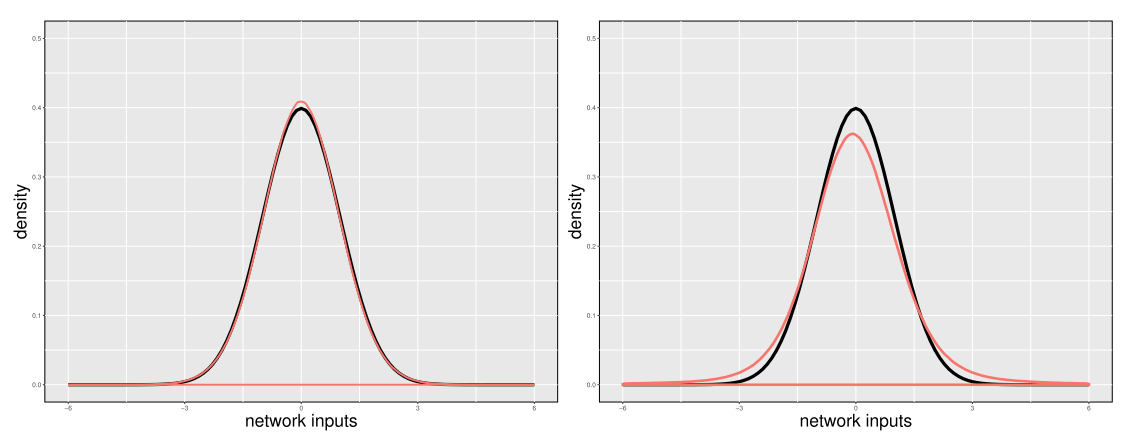
SNNs are really cool: their goal is to create neural networks in which, if the input of any layer is normally distributed, the output will automatically also be normally distributed. This is amazing because normalizing the output of layers is known to be a very efficient way to improve the performance of neural networks, but the current ways to do it (eg BatchNorm) basically involve weird hacks, while in SNN the normalization is an intrinsic part of the mathematics of the neural net.

Read More
Semantic Image Segmentation with DeepLab in Tensorflow

Semantic Image Segmentation with DeepLab in Tensorflow

Today, we are excited to announce the open source release of our latest and best performing semantic image segmentation model, DeepLab-v3+ [1], implemented in Tensorflow. This release includes DeepLab-v3+ models built on top of a powerful convolutional neural network (CNN) backbone architecture [2, 3] for the most accurate results, intended for server-side deployment. As part of this release, we are additionally sharing our Tensorflow model training and evaluation code, as well as models already pre-trained on the Pascal VOC 2012 and Cityscapes benchmark semantic segmentation tasks.

Read More