Towards a Virtual Stuntman

Towards a Virtual Stuntman

  • April 12, 2018
Table of Contents

Towards a Virtual Stuntman

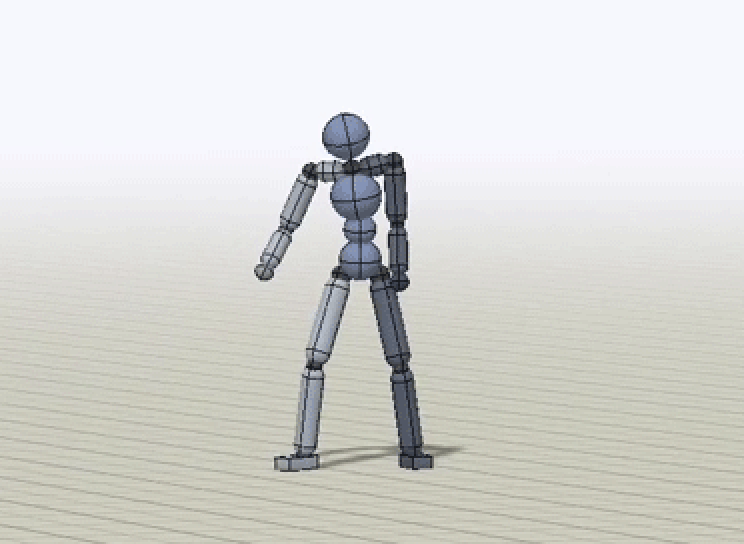
Motion control problems have become standard benchmarks for reinforcement learning, and deep RL methods have been shown to be effective for a diverse suite of tasks ranging from manipulation to locomotion. However, characters trained with deep RL often exhibit unnatural behaviours, bearing artifacts such as jittering, asymmetric gaits, and excessive movement of limbs. Can we train our characters to produce more natural behaviours?

Source: berkeley.edu

Tags :
Share :
comments powered by Disqus

Related Posts

Lessons Learned Reproducing a Deep Reinforcement Learning Paper

Lessons Learned Reproducing a Deep Reinforcement Learning Paper

There are a lot of neat things going on in deep reinforcement learning. One of the coolest things from last year was OpenAI and DeepMind’s work on training an agent using feedback from a human rather than a classical reward signal. There’s a great blog post about it at Learning from Human Preferences, and the original paper is at Deep Reinforcement Learning from Human Preferences.

Read More
The Case Against an Autonomous Military

The Case Against an Autonomous Military

The potential harm of A.I.s deliberately designed to kill in warfare is much more pressing. The U.S. and other countries are working hard to develop military A.I., in the form of automated weapons, that enhance battlefield capabilities while exposing fewer soldiers to injury or death. For the U.S., this would be a natural extension of the existing imperfect drone warfare program—failures in military intelligence have led to the mistaken killing of non-combatants in Iraq.

Read More