Today’s Oceans and a 94M-Year-Old Catastrophe

Today’s Oceans and a 94M-Year-Old Catastrophe

  • April 14, 2018
Table of Contents

Today’s Oceans and a 94M-Year-Old Catastrophe

The ocean is losing its oxygen. Last week, in a sweeping analysis in the journal Science, scientists put it starkly: Over the past 50 years, the volume of the ocean with no oxygen at all has quadrupled, while oxygen-deprived swaths of the open seas have expanded by the size of the European Union.

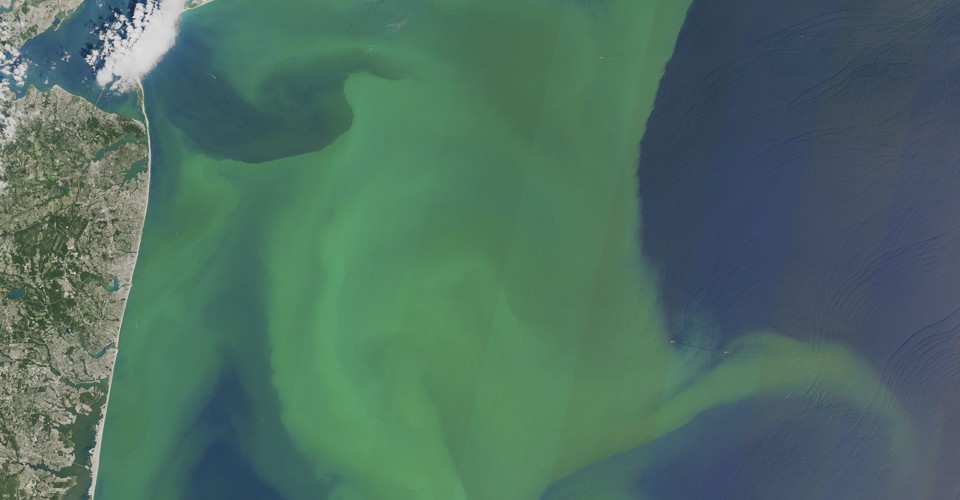
The culprits are familiar: global warming and pollution. Warmer seawater both holds less oxygen and turbocharges the worldwide consumption of oxygen by microorganisms. Meanwhile, agricultural runoff and sewage drive suffocating algae blooms.

Source: theatlantic.com

Tags :
Share :
comments powered by Disqus

Related Posts

Why Whales Got So Big

Why Whales Got So Big

The first time I came face to face with a sea lion, I nearly screamed. I was snorkeling, and after a long time spent staring down at colorful corals, I looked up to see a gigantic bull, a couple of feet in front of my mask. Its eyes were opalescent.

Read More
Satellite images from highly oblique angles are pretty mindblowing

Satellite images from highly oblique angles are pretty mindblowing

Founded in 2010 by three former NASA scientists, Planet Labs has been among the forefront of several companies seeking to provide high-quality, commercially available imagery of planet Earth. As such, it has the capability to look all around the world, in real time.

Read More
Birds can see Earth’s magnetic fields

Birds can see Earth’s magnetic fields

The mystery behind how birds navigate might finally be solved: it’s not the iron in their beaks providing a magnetic compass, but a newly discovered protein in their eyes that lets them ‘see’ Earth’s magnetic fields. These findings come courtesy of two new papers – one studying robins, the other zebra finches. The fancy eye protein is called Cry4, and it’s part of a class of proteins called cryptochromes – photoreceptors sensitive to blue light, found in both plants and animals.

Read More