Scientists Want to Study Exoplanet Atmospheres For Signs of Alien Life

Scientists Want to Study Exoplanet Atmospheres For Signs of Alien Life

  • May 10, 2018
Table of Contents

Scientists Want to Study Exoplanet Atmospheres For Signs of Alien Life

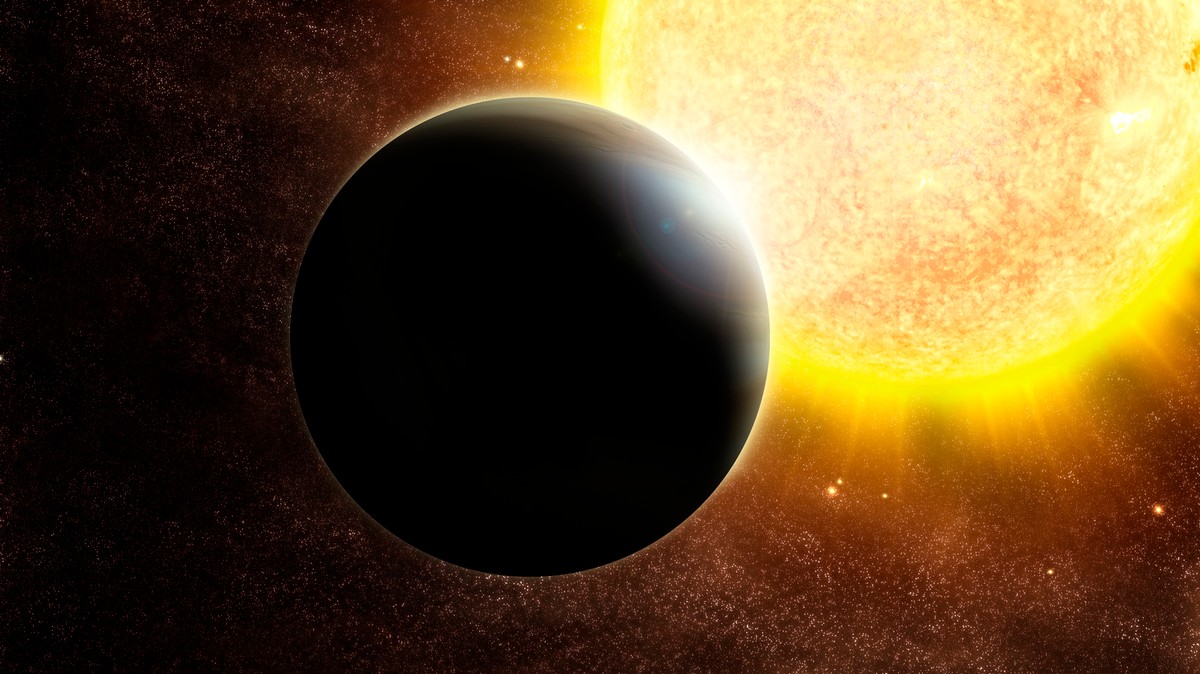
Most exoplanet hunting telescopes are only able to tell basic things about a planet like its mass or distance from its host star, but a new generation of exoplanet telescopes like PLATO promise to reveal their subjects detail, including the composition of their atmospheres. The question, then, is what sorts of atmospheric markers would indicate the presence of extraterrestrial life? In a new paper published Wednesday in Astrophysical Journal Letters, University of California-Riverside planetary scientist Stephanie Olson outlined a dynamic framework for detecting life based on how the composition of exoplanet atmospheres change during the seasons.

The model is based on Earth’s own atmospheric seasons, which change as the Earth rotates on its axis. For example, during the summer the composition of the northern hemisphere’s atmosphere shows a marked rise in oxygen and a corresponding decrease in carbon dioxide because of all the plant growth. Olson argues that similar signatures could reveal the presence of life on other planets.

Source: vice.com
Tags :
Share :
comments powered by Disqus

Related Posts

A Radically Conservative Solution for Cosmology’s Biggest Mystery

A Radically Conservative Solution for Cosmology’s Biggest Mystery

The conflicting measurements have vexed astrophysicists and inspired rampant speculation as to whether unknown physical processes might be causing the discrepancy. Maybe dark matter particles are interacting strongly with the regular matter of planets, stars and galaxies? Or perhaps an exotic particle not yet detected, such as the so-called sterile neutrino, might be playing a role.

Read More
Watch These Trippy NASA Visualizations of Space Magnetism

Watch These Trippy NASA Visualizations of Space Magnetism

Earth is a giant magnet, and the field that surrounds it, called the magnetosphere, is one of the major reasons life on our planet has been able to flourish. But despite its crucial role in warding off cosmic radiation and atmospheric loss, there’s a lot we don’t know about the magnetosphere. That’s why in March 2015, NASA launched the Magnetospheric Multiscale Mission (MMS), a fleet of four spacecraft, to study its secrets.

Read More