A Chemist Shines Light on a Surprising Prime Number Pattern

  • May 15, 2018
Table of Contents

About a year ago, the theoretical chemist Salvatore Torquato met with the number theorist Matthew de Courcy-Ireland to explain that he had done something highly unorthodox with prime numbers, those positive integers that are divisible only by 1 and themselves. Torquato told de Courcy-Ireland, a final-year graduate student at Princeton who had been recommended by another mathematician, that a year before, on a hunch, he had performed diffraction on sequences of prime numbers. Hoping to highlight the elusive order in the distribution of the primes, he and his student Ge Zhang had modeled them as a one-dimensional sequence of particles — essentially, little spheres that can scatter light.

In computer experiments, they bounced light off long prime sequences, such as the million-or-so primes starting from 10,000,000,019. (They found that this “Goldilocks interval” contains enough primes to produce a strong signal without their getting too sparse to reveal an interference pattern.) But in three new papers — one by Torquato, Zhang and the computational chemist Fausto Martelli that was published in the Journal of Physics A in February, and two others co-authored with de Courcy-Ireland that have not yet been peer-reviewed — the researchers report that the primes, like crystals and unlike liquids, produce a diffraction pattern.

Source: quantamagazine.org

Share :
comments powered by Disqus

Related Posts

Yale physicists find signs of a time crystal

Yale physicists find signs of a time crystal

Time crystals, first identified in 2016, are different. Their atoms spin periodically, first in one direction and then in another, as a pulsating force is used to flip them. That’s the “ticking.”

Read More
We Need Bug Bounties for Bad Algorithms

We Need Bug Bounties for Bad Algorithms

Algorithmic auditors are a growing discipline of researchers specializing in computer science and human-computer interaction. They employ a variety of methods to tinker with and uncover how algorithms work, and their research has already sparked public discussions and regulatory investigations into the most dominant and powerful algorithms of the Information Age. From Uber and Booking.com to Google and Facebook, to name a few, these friendly auditors already uncovered bias and deception in the algorithms that control our lives.

Read More
Watch These Trippy NASA Visualizations of Space Magnetism

Watch These Trippy NASA Visualizations of Space Magnetism

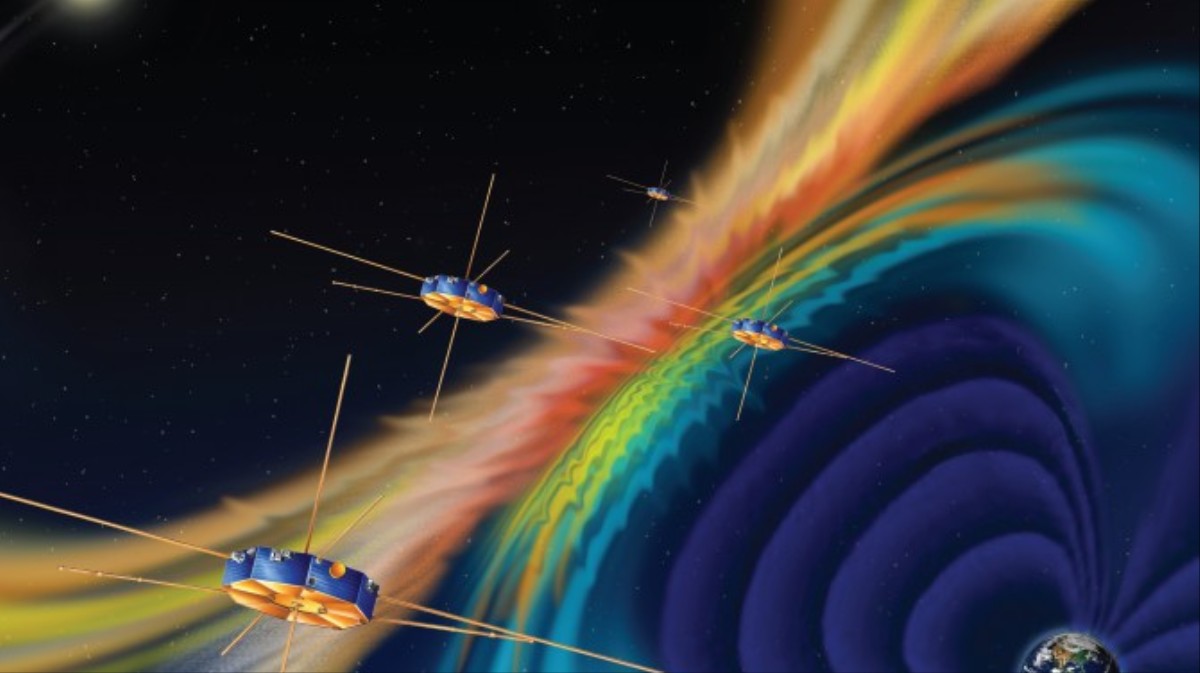
Earth is a giant magnet, and the field that surrounds it, called the magnetosphere, is one of the major reasons life on our planet has been able to flourish. But despite its crucial role in warding off cosmic radiation and atmospheric loss, there’s a lot we don’t know about the magnetosphere. That’s why in March 2015, NASA launched the Magnetospheric Multiscale Mission (MMS), a fleet of four spacecraft, to study its secrets.

Read More