Intel AI Lab open-sources library for deep learning-driven NLP

Intel AI Lab open-sources library for deep learning-driven NLP

  • May 24, 2018
Table of Contents

Intel AI Lab open-sources library for deep learning-driven NLP

The Intel AI Lab has open-sourced a library for natural language processing to help researchers and developers give conversational agents like chatbots and virtual assistants the smarts necessary to function, such as name entity recognition, intent extraction, and semantic parsing to identify the action a person wants to take from their words. The first-ever conference by Intel for AI developers is being held Wednesday and Thursday, May 23 and 24, at the Palace of Fine Arts in San Francisco. The Intel AI Lab now employs about 40 data scientists and researchers and works with divisions of the company developing products like the nGraph framework and hardware like Nervana Neural Network chips, Liu said.

The NLP library, nlp-architect, includes tools made using datasets often seen as benchmarks by members of the academic research community, such as the Stanford Question Answering Dataset (SQuAD), used to test machine reading comprehension. It can also train models using custom data or public benchmark datasets with popular open source frameworks like Google’s TensorFlow or Facebook’s PyTorch.

Source: venturebeat.com
Share :
comments powered by Disqus

Related Posts

Intel Starts R&D Effort in Probabilistic Computing for AI

Intel Starts R&D Effort in Probabilistic Computing for AI

Intel announced today that it is forming a strategic research alliance to take artificial intelligence to the next level. Autonomous systems don’t have good enough ways to respond to the uncertainties of the real world, and they don’t have a good enough way to understand how the uncertainties of their sensors should factor into the decisions they need to make. According to Intel CTO Mike Mayberry the answer is “probabilistic computing”, which he says could be AI’s next wave.

Read More
AlterEgo: Interfacing with devices through silent speech

AlterEgo: Interfacing with devices through silent speech

AlterEgo is a closed-loop, non-invasive, wearable system that allows humans to converse in high-bandwidth natural language with machines, artificial intelligence assistants, services, and other people without any voice—without opening their mouth, and without any discernible movements—simply by vocalizing internally.

Read More
Deep Learning Research: Creating Adaptable Meta-Learning Models

Deep Learning Research: Creating Adaptable Meta-Learning Models

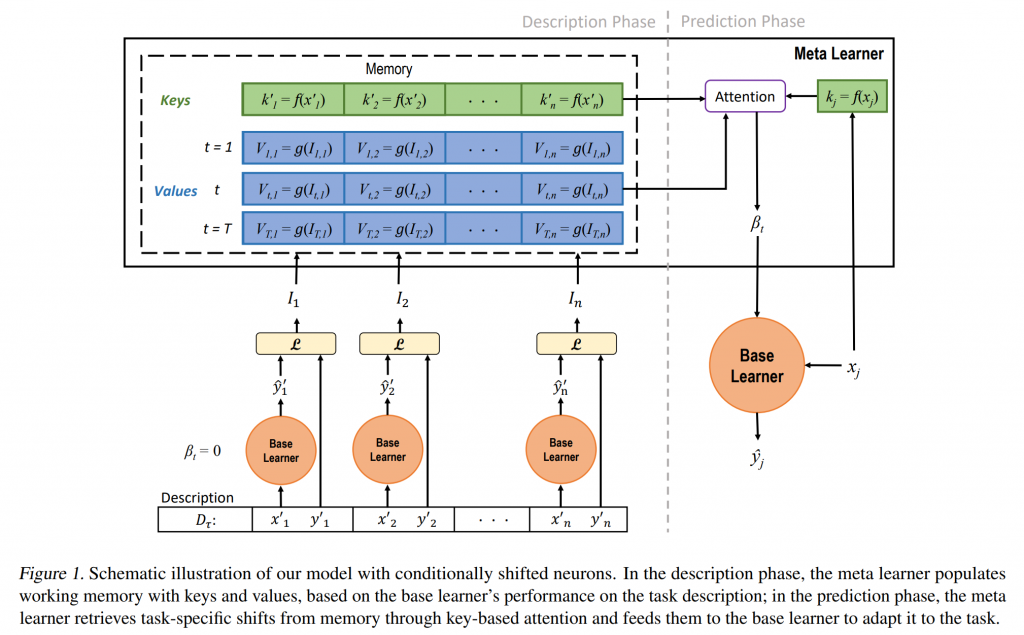
Adaptability is one of the key cognitive abilities that defined us as humans. Even as babies, we can intuitively shift between similar tasks even if we don’t have prior training on them. This contrasts with the traditional train-and-test approach of most artificial intelligence(AI) systems which require an agent to go through massive amounts of training before it can master a specific task.

Read More