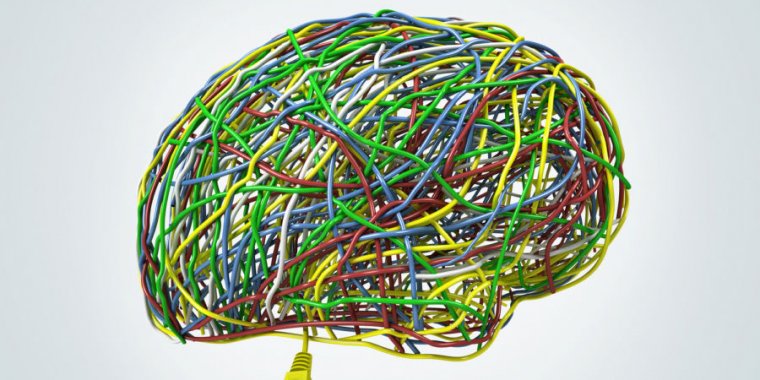
Why do neural networks generalize so poorly?

Why do neural networks generalize so poorly?

  • June 13, 2018
Table of Contents

Why do neural networks generalize so poorly?

Deep convolutional network architectures are often assumed to guarantee generalization for small image translations and deformations. In this paper we show that modern CNNs (VGG16, ResNet50, and InceptionResNetV2) can drastically change their output when an image is translated in the image plane by a few pixels, and that this failure of generalization also happens with other realistic small image transformations. Furthermore, the deeper the network the more we see these failures to generalize.

We show that these failures are related to the fact that the architecture of modern CNNs ignores the classical sampling theorem so that generalization is not guaranteed. We also show that biases in the statistics of commonly used image datasets makes it unlikely that CNNs will learn to be invariant to these transformations. Taken together our results suggest that the performance of CNNs in object recognition falls far short of the generalization capabilities of humans.

Source: arxiv.org

Tags :
Share :
comments powered by Disqus

Related Posts

Americans Less Trusting of Self-Driving Safety Following High-Profile Accidents

Americans Less Trusting of Self-Driving Safety Following High-Profile Accidents

Americans are less trusting of self-driving cars following two deadly accidents involving autonomous or semi-autonomous vehicles, with half of U.S. adults considering those automobiles less safe than human drivers, according to a new poll. A Morning Consult survey conducted March 29-April 1 among a national sample of 2,202 adults found that 27 percent of respondents said self-driving cars are safer than human drivers, while 50 percent said autonomous vehicles are less safe. Eight percent said the automobiles are on par with human drivers when it comes to safety.

Read More
Horovod: Distributed Training Framework for TensorFlow, Keras, and PyTorch

Horovod: Distributed Training Framework for TensorFlow, Keras, and PyTorch

Horovod is a distributed training framework for TensorFlow, Keras, and PyTorch. The goal of Horovod is to make distributed Deep Learning fast and easy to use.

Read More
30+ Machine Learning Resources

30+ Machine Learning Resources

For almost all machine learning projects, the main steps of the ideal solution remain same. Briefly, we all go over the steps below each and every time: Understand the dataClean up, fix the missing values, extract new features, select the best onesBuild the model, compare it with the other ones, tune hyper parameters, find out what is the right metric to evaluate your modelIterate this process over and over again until you believe you have the best solution:) Iterate this process over and over again until you believe you have the best solution:)

Read More