Google AI Tool Identifies a Tumor’s Mutations From an Image

Google AI Tool Identifies a Tumor’s Mutations From an Image

  • September 17, 2018
Table of Contents

Google AI Tool Identifies a Tumor’s Mutations From an Image

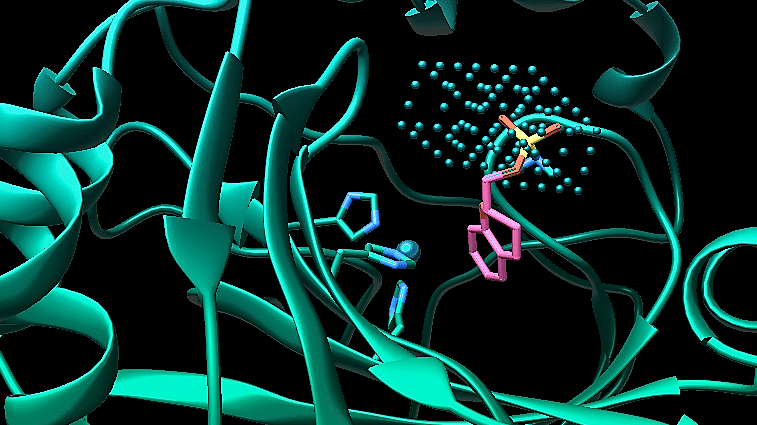
The algorithm can distinguish between different kinds of lung cancer, and could speed up a patient’s diagnosis by weeks. The image shows the process by which an AI tool analyzes a slice of cancerous tissue to create a map that tells apart two lung cancer types which require different treatments, with squamous cell carcinoma in red, lung squamous cell carcinoma in blue, and normal lung tissue in gray. For decades, doctors have relied on the well-trained eyes of human pathologists to give their patients a cancer diagnosis.

Now, researchers are teaching machines to do that time-intensive work in as little as a few seconds. In new research published today in Nature Medicine, scientists at New York University re-trained an off-the-shelf Google deep learning algorithm to distinguish between two of the most common types of lung cancers with 97 percent accuracy. This type of AI—the same tech that identifies faces, animals, and objects in pictures uploaded to Google’s online services—has proven adept at diagnosing disease before, including diabetic blindness and heart conditions.

But NYU’s neural network learned how to do something no pathologist has ever done: identify the genetic mutations teeming inside each tumor from just a picture.

Source: wired.com
Share :
comments powered by Disqus

Related Posts

UBC breakthrough opens door to $100 ultrasound machine

UBC breakthrough opens door to $100 ultrasound machine

Engineers at the University of British Columbia have developed a new ultrasound transducer, or probe, that could dramatically lower the cost of ultrasound scanners to as little as $100. Their patent-pending innovation—no bigger than a Band-Aid—is portable, wearable and can be powered by a smartphone. Conventional ultrasound scanners use piezoelectric crystals to create images of the inside of the body and send them to a computer to create sonograms.

Read More
AI System Approved For Diabetic Retinopathy Diagnosis

AI System Approved For Diabetic Retinopathy Diagnosis

A system designed by a University of Iowa ophthalmologist that uses artificial intelligence (AI) to detect diabetic retinopathy without a person interpreting the results earned Food and Drug Administration (FDA) authorization in April, following a clinical trial in primary care offices. Results of that study were published Aug. 28 online in Nature Digital Medicine, offering the first look at data that led to FDA clearance for IDx-DR, the first medical device that uses AI for the autonomous detection of diabetic retinopathy. The clinical trial, which also was the first study to prospectively assess the safety of an autonomous AI system in patient care, compared the performance of IDx-DR to the gold standard diagnostic for diabetic retinopathy, which is the leading cause of vision loss in adults and one of the most severe complications for the 30.3 million Americans living with diabetes.

Read More