Your gut is directly connected to your brain, by a newly discovered neuron circuit

Your gut is directly connected to your brain, by a newly discovered neuron circuit

  • September 22, 2018
Table of Contents

Your gut is directly connected to your brain, by a newly discovered neuron circuit

The human gut is lined with more than 100 million nerve cells—it’s practically a brain unto itself. And indeed, the gut actually talks to the brain, releasing hormones into the bloodstream that, over the course of about 10 minutes, tell us how hungry it is, or that we shouldn’t have eaten an entire pizza. But a new study reveals the gut has a much more direct connection to the brain through a neural circuit that allows it to transmit signals in mere seconds.

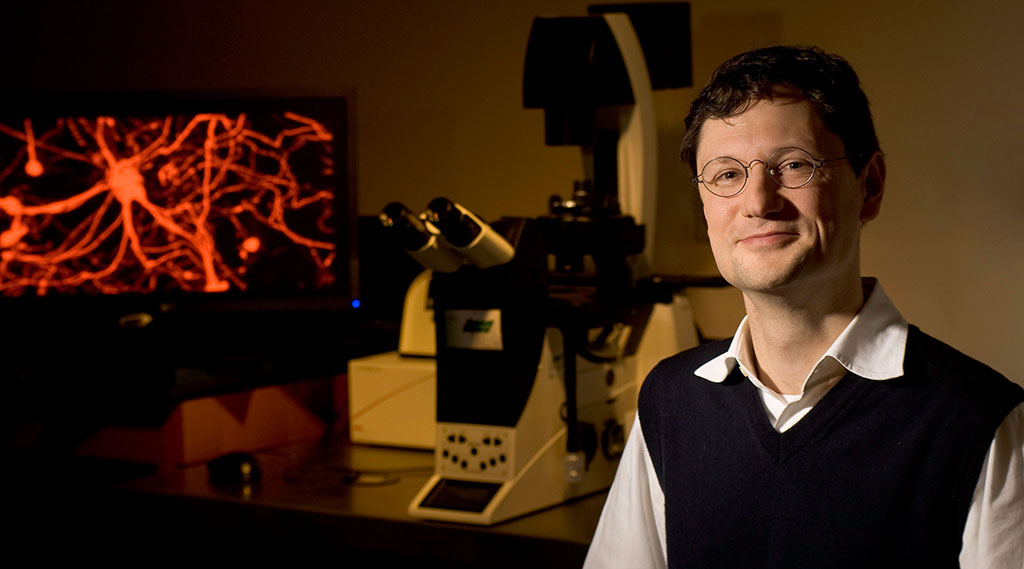
The findings could lead to new treatments for obesity, eating disorders, and even depression and autism—all of which have been linked to a malfunctioning gut. In 2010, neuroscientist Diego Bohórquez of Duke University in Durham, North Carolina, made a startling discovery while looking through his electron microscope. Enteroendocrine cells, which stud the lining of the gut and produce hormones that spur digestion and suppress hunger, had footlike protrusions that resemble the synapses neurons use to communicate with each other.

Bohórquez knew the enteroendocrine cells could send hormonal messages to the central nervous system, but he also wondered whether they could “talk” to the brain using electrical signals, the way that neurons do. If so, they would have to send the signals through the vagus nerve, which travels from the gut to the brain stem. He and colleagues injected a fluorescent rabies virus, which is transmitted through neuronal synapses, into the colons of mice and waited for the enteroendocrine cells and their partners to light up.

Those partners turned out to be to vagal neurons, the researchers report today in Science.

Source: sciencemag.org
Share :
comments powered by Disqus

Related Posts

MIT Researchers Have Developed a ‘System for Dream Control’

MIT Researchers Have Developed a ‘System for Dream Control’

There is a borderland between waking life and the uncharted wilderness of sleep that we all traverse each night, but we rarely stop to marvel at the strangeness of this liminal world. If we do, we find that it is full of hallucinations both wonderful and terrifying, a mental goulash of reality and fantasy.

Read More
Human blood cells transformed into functional neurons

Human blood cells transformed into functional neurons

Human immune cells in blood can be converted directly into functional neurons in the laboratory in about three weeks with the addition of just four proteins, researchers at the Stanford University School of Medicine have found. The conversion occurs with relatively high efficiency — generating as many as 50,000 neurons from 1 milliliter of blood — and it can be achieved with fresh or previously frozen and stored blood samples, which vastly enhances opportunities for the study of neurological disorders such as schizophrenia and autism. A paper describing the findings was published online June 4 in the Proceedings of the National Academy of Sciences.

Read More
The Microbiome is the Fundamental Future of Personalized Medicine

The Microbiome is the Fundamental Future of Personalized Medicine

If anything makes us human it’s our minds, thoughts and emotions. And yet a controversial new concept is emerging that claims gut bacteria are an invisible hand altering our brains. Science is piecing together how the trillions of microbes that live on and in all of us—our microbiome—affect our physical health.

Read More