Kubernetes Failure Stories

Kubernetes Failure Stories

  • January 20, 2019
Table of Contents

Kubernetes Failure Stories

I started to compile a list of public failure/horror stories related to Kubernetes. It should make it easier for people tasked with operations to find outage reports to learn from. Since we started with Kubernetes at Zalando in 2016, we collected many internal postmortems.

Docker bugs (daemon unresponsive, process stuck in pipe wait, ..) were a major pain point in the beginning, but Docker itself has become more mature and did not bite us recently. The biggest chunk of problems can be attributed to the nature of distributed systems and ‘cascading failures’, e.g. a Kubernetes API server outage should not affect running workloads, but it did, or see our recent CoreDNS incident.

Source: srcco.de
Share :
comments powered by Disqus

Related Posts

8 emerging trends in container orchestration

8 emerging trends in container orchestration

Containerization is now officially mainstream. A quarter of Datadog’s total customer base has adopted Docker and other container technologies, and half of the companies with more than 1,000 hosts have done so. As containers take a more prominent place in the infrastructure landscape, we see our customers adding automation and orchestration to help manage their fleets of ephemeral containers.

Read More
Observability at Scale: Building Uber’s Alerting Ecosystem

Observability at Scale: Building Uber’s Alerting Ecosystem

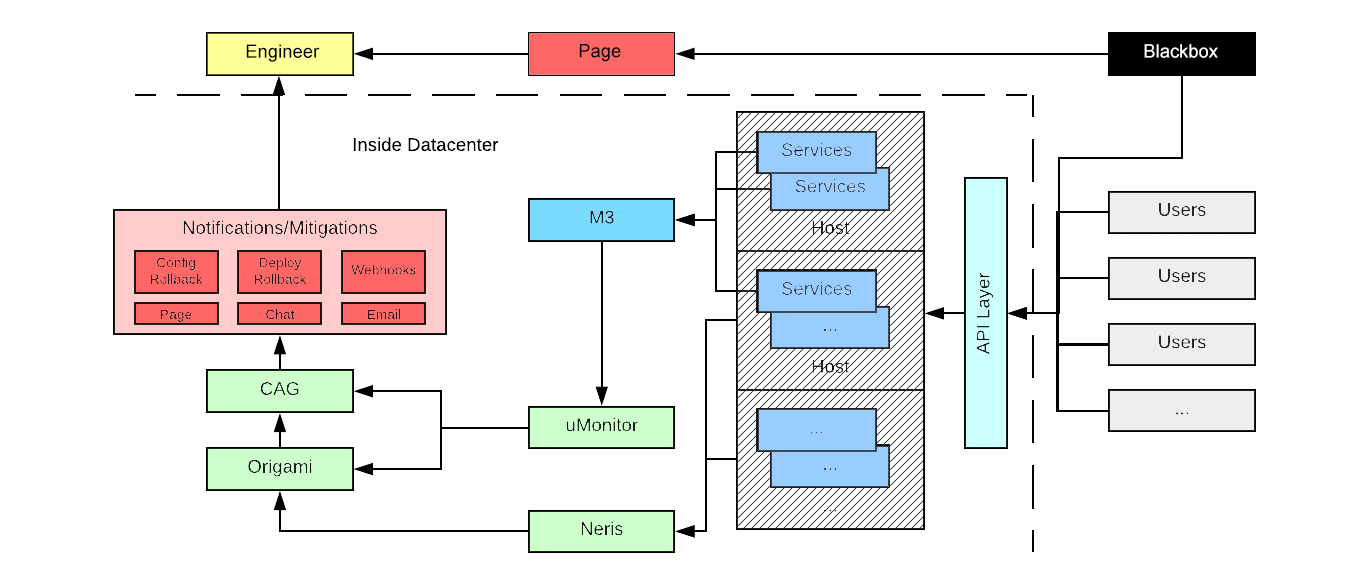
Uber’s software architectures consists of thousands of microservices that empower teams to iterate quickly and support our company’s global growth. These microservices support a variety of solutions, such as mobile applications, internal and infrastructure services, and products along with complex configurations that affect these products at city and sub-city levels. To maintain our growth and architecture, Uber’s Observability team built a robust, scalable metrics and alerting pipeline responsible for detecting, mitigating, and notifying engineers of issues with their services as soon as they occur.

Read More
Deployment strategies for the Jaeger Agent

Deployment strategies for the Jaeger Agent

If you’ve been following the evolution of the Kubernetes templates for Jaeger, you might have noticed an important change recently: the Jaeger Agent is not being deployed as a DaemonSet anymore. Instead, instructions are now being provided on how to deploy it as a “Sidecar”. The Agent component was developed to act as a “buffer” between the tracer and the collector.

Read More