Layer 7 Observability with Consul Service Mesh

Layer 7 Observability with Consul Service Mesh

  • June 8, 2019
Table of Contents

Layer 7 Observability with Consul Service Mesh

Observability comes from the world of engineering and control theory. Control theory states that observability is itself a measure that describes “how well internal states of a system can be inferred from knowledge of external outputs”. In contrast to monitoring which is something you do, observability, is a property of a system.

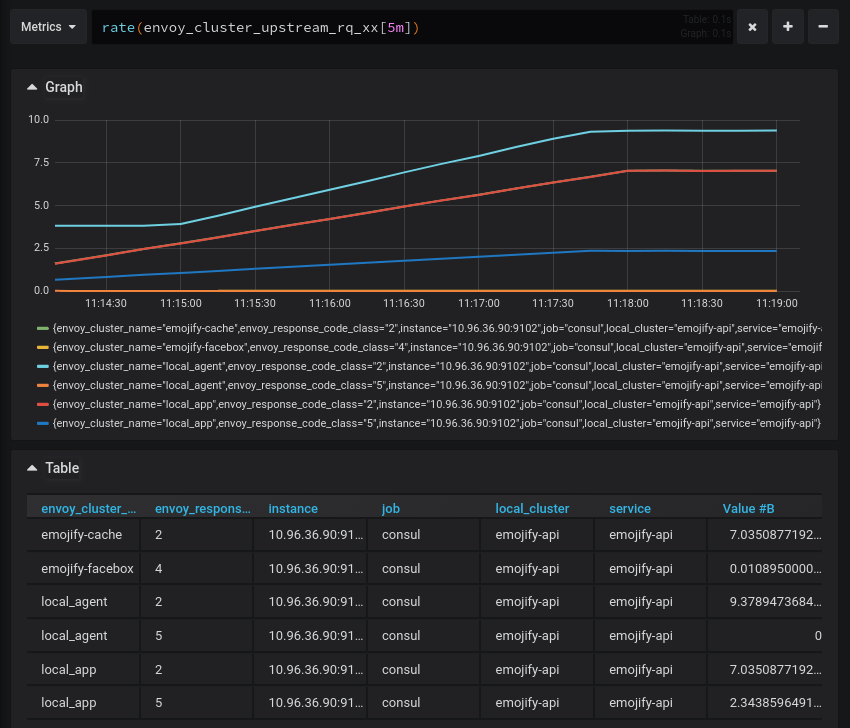
A system is observable if the external outputs, logging, metrics, tracing, health-checks, etc, allow you to understand its internal state. Observability is especially important for modern, distributed applications with frequent releases. Compared to a monolithic architecture where components communicate through in-process calls, microservice architectures have more failures during service interactions because these calls happen over potentially unreliable networks.

And with it becoming increasingly difficult to create realistic production-like environments for testing, it becomes more important to detect issues in production before customers do. A view into those service calls helps teams detect failures early, track them and engineer for resiliency.

Source: hashicorp.com

Share :
comments powered by Disqus

Related Posts

AWS App Mesh

AWS App Mesh

AWS recently released a new service App Mesh during the 2019 summit which has generated a lot of interest from developers world-wide. This service is a great example of how Amazon is highly customer-focused in delivery of products/features to the market. Besides that, there is no additional charge for using the service!:-)

Read More
Announcing Service Mesh Interface (SMI) Support and Collaboration

Announcing Service Mesh Interface (SMI) Support and Collaboration

Today we announced that Solo.io is a launch partner of the Service Mesh Interface (SMI) specification in collaboration with Microsoft, Bouyant and Hashicorp with support across the cloud-native ecosystem. As part of today’s announcement, the SuperGloo project and The Service Mesh Hub are the first reference implementations of SMI available today. The Service Mesh Interface (SMI) is a specification for service meshes that run on Kubernetes and defines a common standard that can be implemented by a variety of providers.

Read More