MTTR is dead, long live CIRT

MTTR is dead, long live CIRT

  • August 3, 2019
Table of Contents

MTTR is dead, long live CIRT

The game is changing for the IT ops community, which means the rules of the past make less and less sense. Organizations need accurate, understandable, and actionable metrics in the right context to measure operations performance and drive critical business transformation. The more customers use modern tools and the more variation in the types of incidents they manage, the less sense it makes to smash all those different incidents into one bucket to compute an average resolution time that will represent ops performance, which is what IT has been doing for a long time.

History shows that context is key when analyzing signals to prevent errors and misunderstandings. For example, during the 1980s, Sweden set up a system to analyze hydrophone signals to alert them to Russian submarines in local Sweden waters. The Swedes used an acoustic signature they thought represented a class of Russian submarines—but was actually gas bubbles released by herring when confronted by a potential predator.

This misinterpretation of a metric increased tensions between the countries and almost resulted in a war.

Source: opensource.com
Share :
comments powered by Disqus

Related Posts

Introducing Thanos: Prometheus at Scale

Introducing Thanos: Prometheus at Scale

Prometheus’s simple and reliable operational model is one of its major selling points. However, past a certain scale, we’ve identified a few shortcomings. To resolve those, we’re today officially announcing Thanos, an open source project by Improbable to seamlessly transform existing Prometheus deployments in clusters around the world into a unified monitoring system with unbounded historical data storage.

Read More
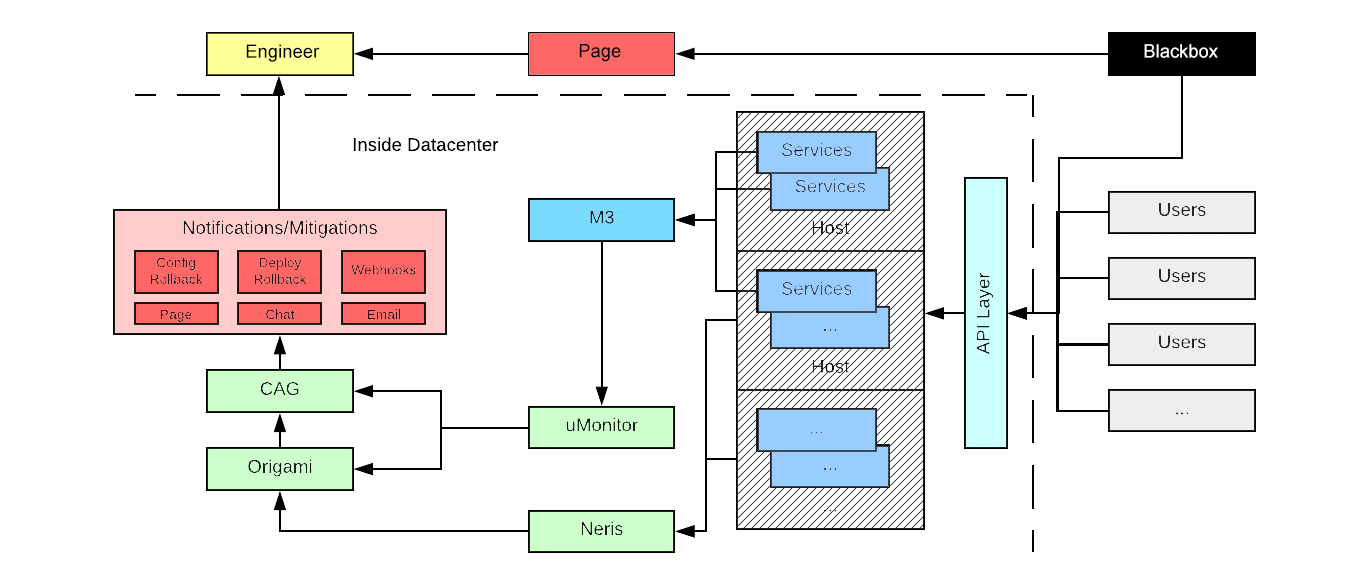
Observability at Scale: Building Uber’s Alerting Ecosystem

Observability at Scale: Building Uber’s Alerting Ecosystem

Uber’s software architectures consists of thousands of microservices that empower teams to iterate quickly and support our company’s global growth. These microservices support a variety of solutions, such as mobile applications, internal and infrastructure services, and products along with complex configurations that affect these products at city and sub-city levels. To maintain our growth and architecture, Uber’s Observability team built a robust, scalable metrics and alerting pipeline responsible for detecting, mitigating, and notifying engineers of issues with their services as soon as they occur.

Read More