Replay in biological and artificial neural networks

Replay in biological and artificial neural networks

  • September 8, 2019
Table of Contents

Replay in biological and artificial neural networks

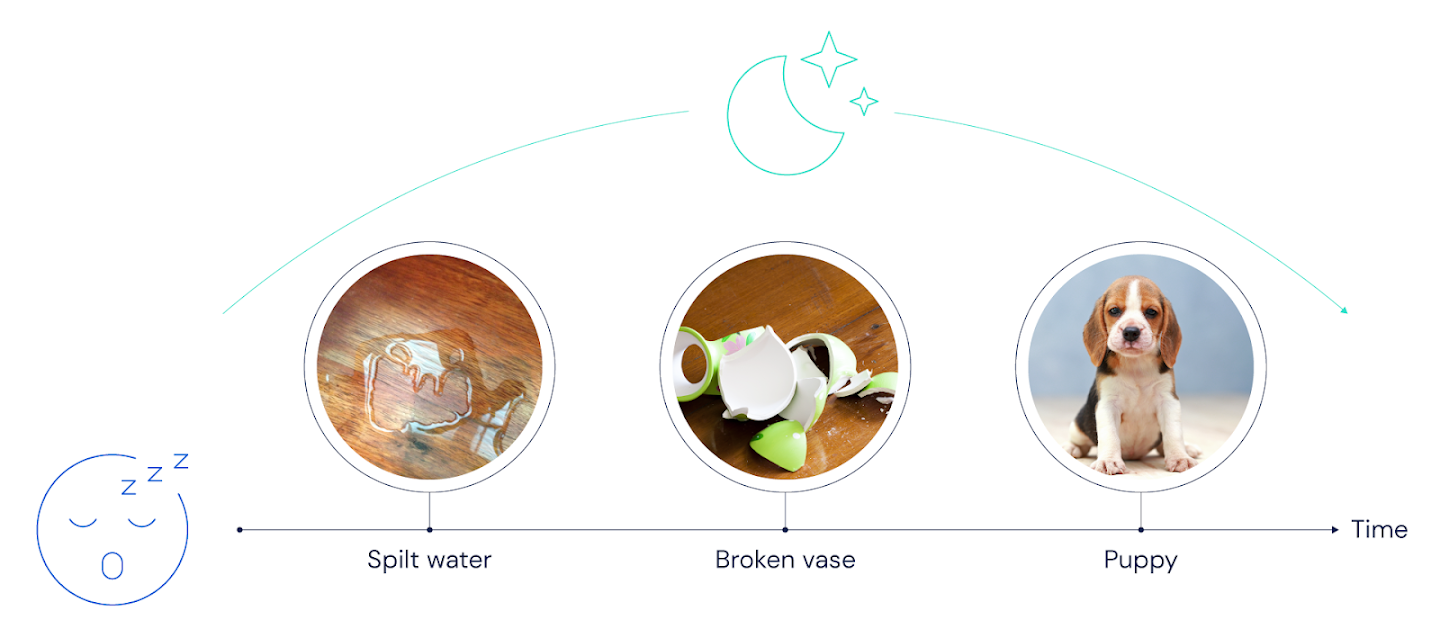
Our waking and sleeping lives are punctuated by fragments of recalled memories: a sudden connection in the shower between seemingly disparate thoughts, or an ill-fated choice decades ago that haunts us as we struggle to fall asleep. By measuring memory retrieval directly in the brain, neuroscientists have noticed something remarkable: spontaneous recollections, measured directly in the brain, often occur as very fast sequences of multiple memories. These so-called ‘replay’ sequences play out in a fraction of a second–so fast that we’re not necessarily aware of the sequence.

In parallel, AI researchers discovered that incorporating a similar kind of experience replay improved the efficiency of learning in artificial neural networks. Over the last three decades, the AI and neuroscientific studies of replay have grown up together. Machine learning offers hypotheses sophisticated enough to push forward our expanding knowledge of the brain; and insights from neuroscience guide and inspire AI development.

Replay is a key point of contact between the two fields because like the brain, AI uses experience to learn and improve. And each piece of experience offers much more potential for learning than can be absorbed in real-time–so continued offline learning is crucial for both brains and artificial neural nets. Neural replay sequences were originally discovered by studying the hippocampus in rats.

As we know from the Nobel prize winning work of John O’Keefe and others, many hippocampal cells fire only when the animal is physically located in a specific place. In early experiments, rats ran the length of a single corridor or circular track, so researchers could easily determine which neuron coded for each position within the corridor.

Source: deepmind.com
Tags :
Share :
comments powered by Disqus

Related Posts

Teaching Computers to Answer Complex Questions

Teaching Computers to Answer Complex Questions

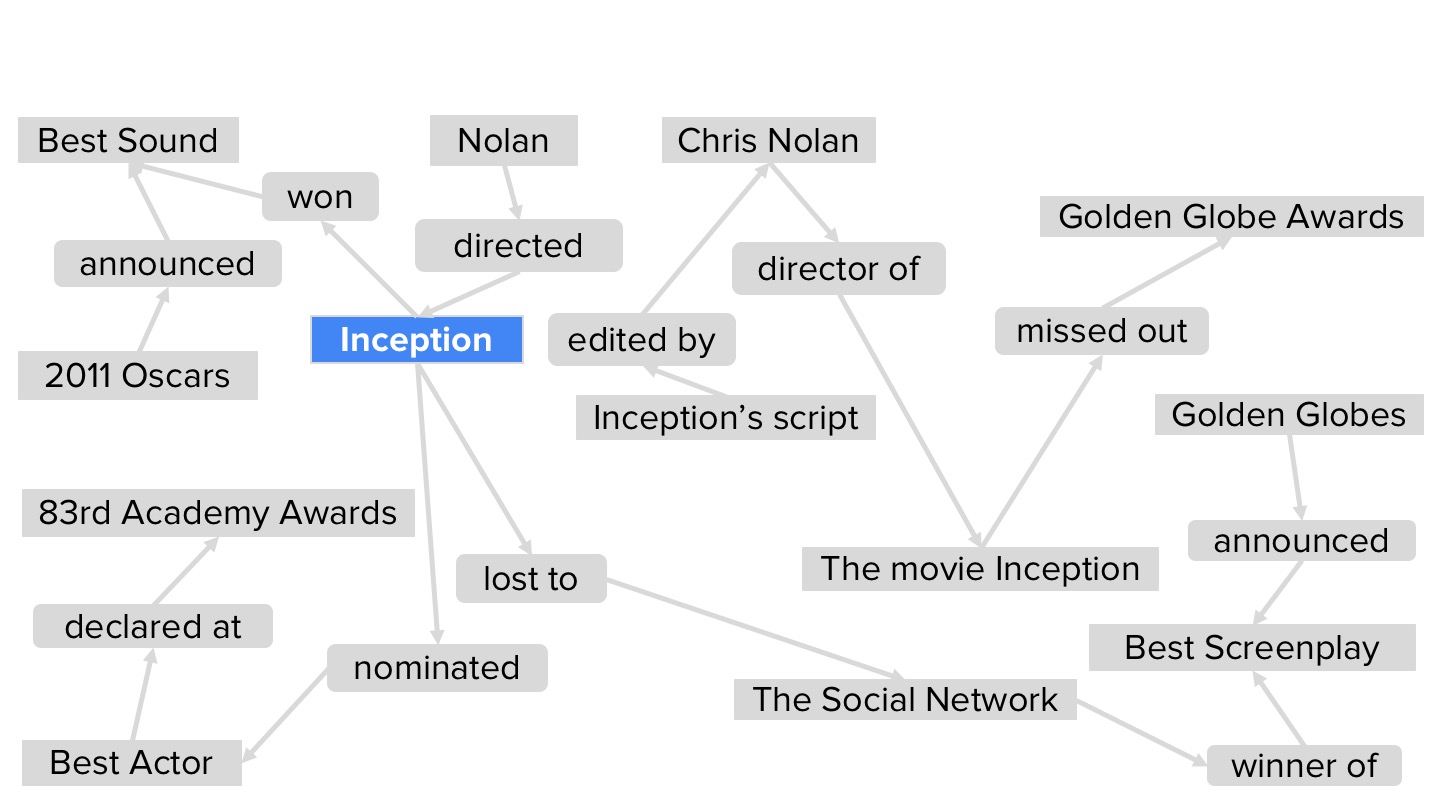
Computerized question-answering systems usually take one of two approaches. Either they do a text search and try to infer the semantic relationships between entities named in the text, or they explore a hand-curated knowledge graph, a data structure that directly encodes relationships among entities. With complex questions, however — such as “Which Nolan films won an Oscar but missed a Golden Globe?” — both of these approaches run into difficulties.

Read More
New advances in natural language processing

New advances in natural language processing

Natural language understanding (NLU) and language translation are key to a range of important applications, including identifying and removing harmful content at scale and connecting people across different languages worldwide. Although deep learning–based methods have accelerated progress in language processing in recent years, current systems are still limited when it comes to tasks for which large volumes of labeled training data are not readily available. Recently, Facebook AI has achieved impressive breakthroughs in NLP using semi-supervised and self-supervised learning techniques, which leverage unlabeled data to improve performance beyond purely supervised systems.

Read More
First Programmable Memristor Computer

First Programmable Memristor Computer

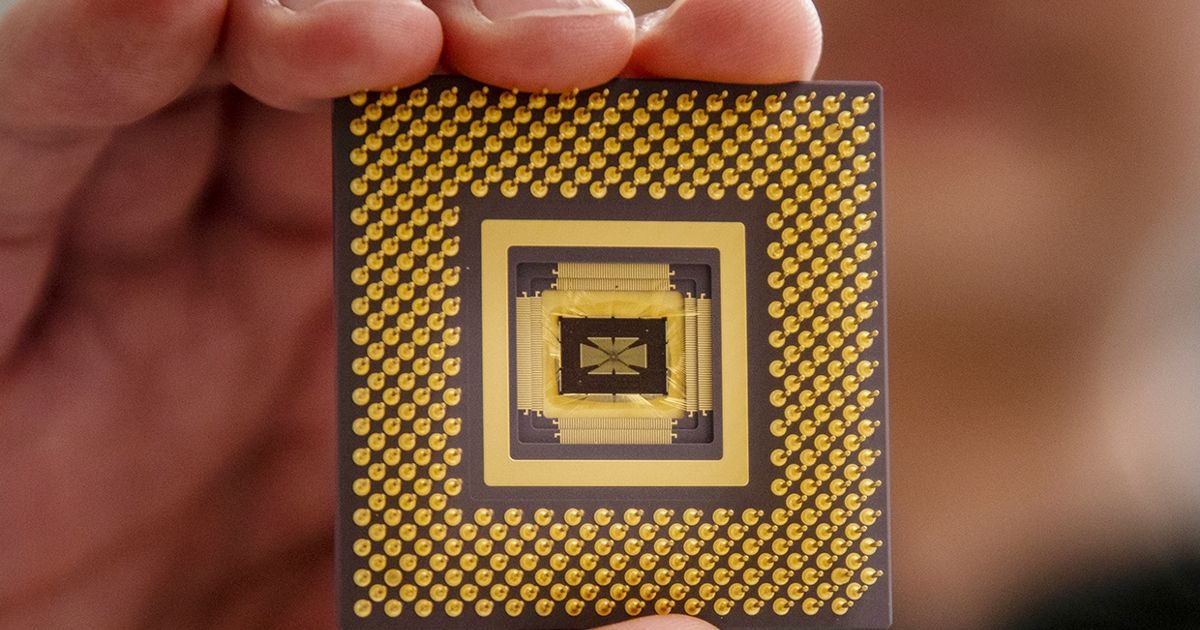
Michigan team builds memristors atop standard CMOS logic to demo a system that can do a variety of edge computing AI tasks Hoping to speed AI and neuromorphic computing and cut down on power consumption, startups, scientists, and established chip companies have all been looking to do more computing in memory rather than in a processor’s computing core. Memristors and other nonvolatile memory seem to lend themselves to the task particularly well. However, most demonstrations of in-memory computing have been in standalone accelerator chips that either are built for a particular type of AI problem or that need the off-chip resources of a separate processor in order to operate.

Read More