Library of Congress Storage Architecture

Library of Congress Storage Architecture

  • February 21, 2020
Table of Contents

Library of Congress Storage Architecture

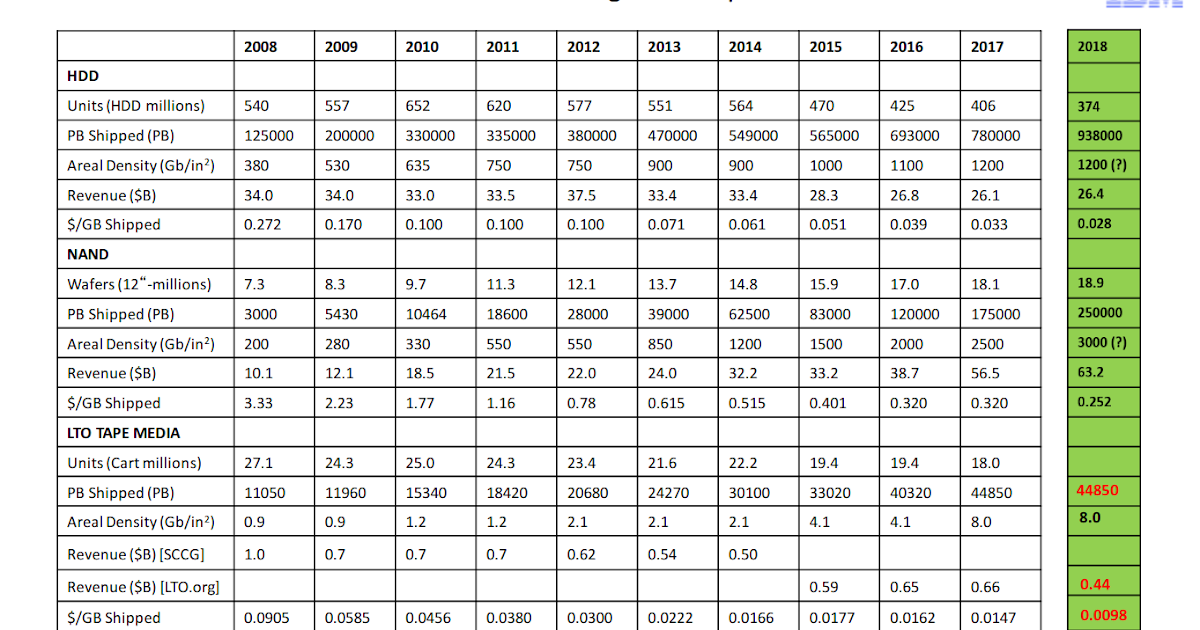
In 2026 is there demand for 7X more manufactured storage annually and is there sufficient value for this storage to spend $122B more annually (2.4X) for this storage? Unlike HDD, tape magnetic physics is not the limiting issues since tape bit cells are 60X larger than HDD bit cells … The projected tape areal density in 2025 (90 Gbit/in2) is 13x smaller than today’s HDD areal density and has already been demonstrated in laboratory environments.

IBM is the last of the hardware manufacturers: IBM is the only builder of LTO8 IBM is the only vendor left with enterprise class tape drives If you only have one manufacturer how do you mitigate risk? These cloud archival solutions all use tape: Amazon AWS Glacier and Glacier Deep ($1/TB/month) Azure General Purpose v2 storage Archive ($2/TB/month)

Google GCP Coldline($7/TB/month) If it’s all the same tape, how do we mitigate risk?

Source: dshr.org

Share :
comments powered by Disqus

Related Posts

Observability at Scale: Building Uber’s Alerting Ecosystem

Observability at Scale: Building Uber’s Alerting Ecosystem

Uber’s software architectures consists of thousands of microservices that empower teams to iterate quickly and support our company’s global growth. These microservices support a variety of solutions, such as mobile applications, internal and infrastructure services, and products along with complex configurations that affect these products at city and sub-city levels. To maintain our growth and architecture, Uber’s Observability team built a robust, scalable metrics and alerting pipeline responsible for detecting, mitigating, and notifying engineers of issues with their services as soon as they occur.

Read More
The Biggest IT Failures of 2018

The Biggest IT Failures of 2018

This year provedonce againthat IT-related failures “are universally unprejudiced: they happen in every country; to large companies and small; in commercial, nonprofit, and governmental organizations; and without regard to status or reputation.” Below is a review that just scratches the surface of the sundry failures, glitches, and other IT hiccups that made the news in 2018. This year saw a slight reduction in the number of flight cancellations and delays due to computer-related problems as compared with the past three years, especially in the United States.

Read More