News
- Home /
- News
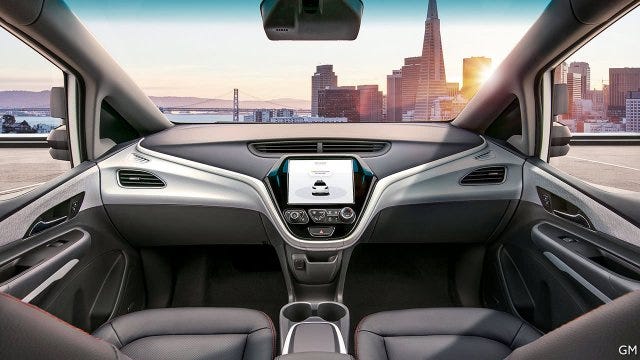
What’s it like to ride in a self-driving car?
I’ve spent the past few months working on a 10,000-word special report on AVs for The Economist, which was published in this week’s issue. The focus of my report is mostly on the long-term implications of AVs, based on the assumption (a reasonable one, I think) that the technology can be made to work reliably in the next few years. Rather than focusing on the minutiae of things like the ever-changing industry alliances, or who is suing who, I concentrated instead on the impact on urban planning, the transformation of retailing and the broader social and political implications of cars that can drive themselves.
Read More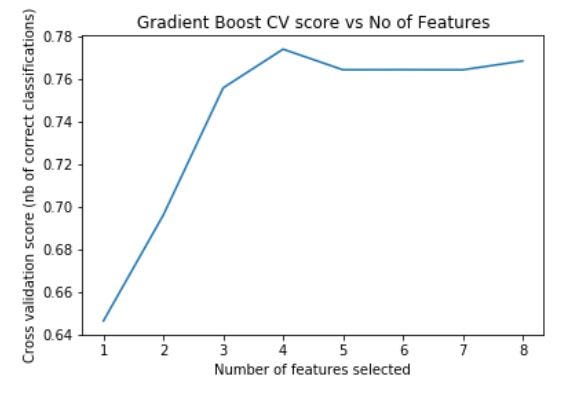
Machine Learning Workflow on Diabetes Data : Part 02
In my last article of this series, we discussed about the machine learning workflow on the diabetes data set. And discussed about topics such as data exploration, data cleaning, feature engineering basics and model selection process. You can find the previous article below.
Read More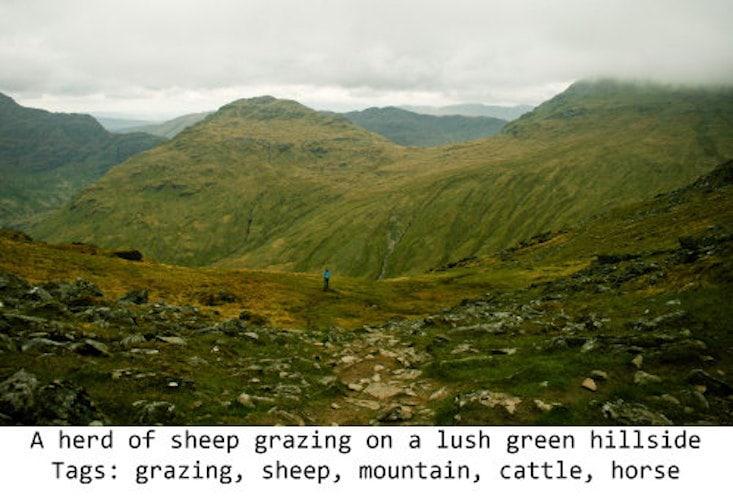
This Neural Net Hallucinates Sheep
If you’ve been on the internet today, you’ve probably interacted with a neural network. They’re a type of machine learning algorithm that’s used for everything from language translation to finance modeling. One of their specialties is image recognition.
Read More

The forgetting curve explains why humans struggle to memorize
Learning has an evolutionary purpose: Among species, individuals that adapt to their environments will succeed. That’s why your brain more easily retains important or surprising information: It takes very little effort to remember that the neighbor’s dog likes to bite. Remembering the dog’s name is harder.
Read More
The Building Blocks of Interpretability
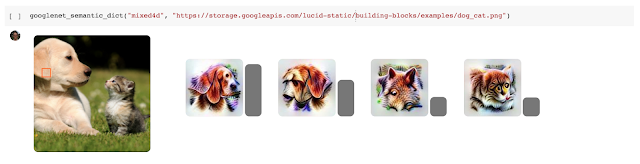
In 2015, our early attempts to visualize how neural networks understand images led to psychedelic images. Soon after, we open sourced our code as DeepDream and it grew into a small art movement producing all sorts of amazing things. But we also continued the original line of research behind DeepDream, trying to address one of the most exciting questions in Deep Learning: how do neural networks do what they do?
Read More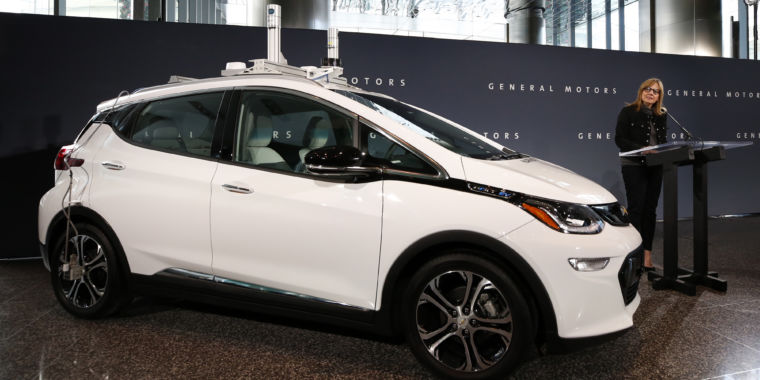
Raging human drivers slap, body slam innocent self-driving cars
Of those, two involve humans mildly attacking the car in question. According to state law, companies that operate self-driving cars must report any such incidents to the DMV. Since the Golden State began keeping such records, there have been a total of 58 such reports, including the six in 2018.
Read More
Did plants cause one of Earth’s great extinctions?
Clues are hard to come by when you’re trying to look back to a time when the continents clumped together like a closed fist. But geologists have found evidence that plants, the most gentle of organisms, may have helped kill most of the life in the oceans 374 million years ago.
Read MoreCategories
Tags
- 3dprinting
- 5g
- Agent
- Agentic
- Ai
- Alexa
- Algorithm
- Amazon
- Ambassador
- Ansible
- Anthropic
- Api
- Apple
- Appmesh
- Appswitch
- Argo
- Art
- Artificialintelligence
- Astronomy
- Augmentedreality
- Aurora
- Australia
- Authentication
- Automation
- Aws
- Azure
- Bayesian
- Bgp
- Bigdata
- Bioengineering
- Biology
- Biotech
- Blackhole
- Blockchain
- Brain
- Build
- Buildah
- Business
- Cancer
- Casestudy
- China
- Chip
- Cia
- Cicd
- Cilium
- Climatechange
- Cloud
- Cloudflare
- Cloudnative
- Cncf
- Codeanalysis
- Computing
- Connectedcars
- Consul
- Container
- Coredns
- Creativity
- Crio
- Crispr
- Cubesat
- Culture
- Dashboard
- Data
- Database
- Datacenter
- Datadog
- Datascience
- Dataset
- Deeplearning
- Deepmind
- Developer
- Development
- Devops
- Digitalcurrency
- Dna
- Dns
- Docker
- Drone
- Ec2
- Economy
- Education
- Einstein
- Eks
- Elasticsearch
- Electricvehicle
- Emdrive
- Energy
- Engineering
- Envoy
- Erlang
- Esa
- Facialrecognition
- Fail
- Falco
- Fashion
- Fda
- Federation
- Fitnessfunction
- Flair
- Fluentd
- Flutter
- Flyingcars
- Food
- Funny
- Gaia
- Gcp
- Gdpr
- Genome
- Geography
- Geopolitics
- Gis
- Git
- Github
- Gitlab
- Gitops
- Gloo
- Go
- Gps
- Grafana
- Graphene
- Graphql
- Grpc
- Hashicorp
- Health
- Healthcare
- Helm
- Hft
- Highavailability
- History
- Http
- Hurricane
- Hyperloop
- Iac
- Ibm
- Image
- Imagerecognition
- Ingress
- Innovation
- Intel
- Ios
- Iot
- Istio
- Jaeger
- Jenkins
- Julia
- Kafka
- Keras
- Kiali
- Kitesurf
- Knative
- Kubedb
- Kubeedge
- Kubernetes
- Lambda
- Latinamerica
- Legal
- Lidar
- Linkerd
- Linux
- Llm
- Lyft
- M3
- Machinelearning
- Mars
- Math
- Mcp
- Microservices
- Microsoft
- Mobile
- Mongo
- Monitoring
- Moon
- Multicloud
- Multicluster
- Mysql
- Nanorobot
- Nasa
- Nature
- Navigation
- Network
- Networking
- Newrelic
- News
- Nextjs
- Nlp
- Nlu
- Observability
- Onnx
- Onpremise
- Opencensus
- Openmetrics
- Opentracing
- Openwhisk
- Operator
- Opinion
- Outage
- Perforce
- Performance
- Pharma
- Philosophy
- Physics
- Podman
- Postgres
- Pprof
- Presto
- Privacy
- Programming
- Prometheus
- Protocol
- Psychology
- Python
- Pytorch
- Qa
- Quantum
- Quantumcomputing
- Qubit
- React
- Recycling
- Redis
- Release
- Renewable
- Research
- Resilience
- Rnn
- Robot
- Rook
- Scalability
- Scaling
- Science
- Secrets
- Security
- Selfdrivingcars
- Sentry
- Serverless
- Servicemesh
- Slack
- Smartgrid
- Smi
- Sociology
- Space
- Spacex
- Spacy
- Spark
- Spinnaker
- Sql
- Squash
- Sre
- Startup
- Storage
- Study
- Success
- Swift
- Sysdig
- Tailwind
- Technology
- Tensorflow
- Terraform
- Tesla
- Testcategory1
- Textclassification
- Traefik
- Training
- Transportation
- Troubleshooting
- Uber
- Ubi
- Vault
- Velero
- Versioncontrol
- Video
- Virtualreality
- Vision
- Visualization
- Vitess
- Warfare
- Wd
- Web
- Weird
- Wikipedia