Having AI systems try to outwit one another could help judge their intentions

Having AI systems try to outwit one another could help judge their intentions

  • May 6, 2018
Table of Contents

Having AI systems try to outwit one another could help judge their intentions

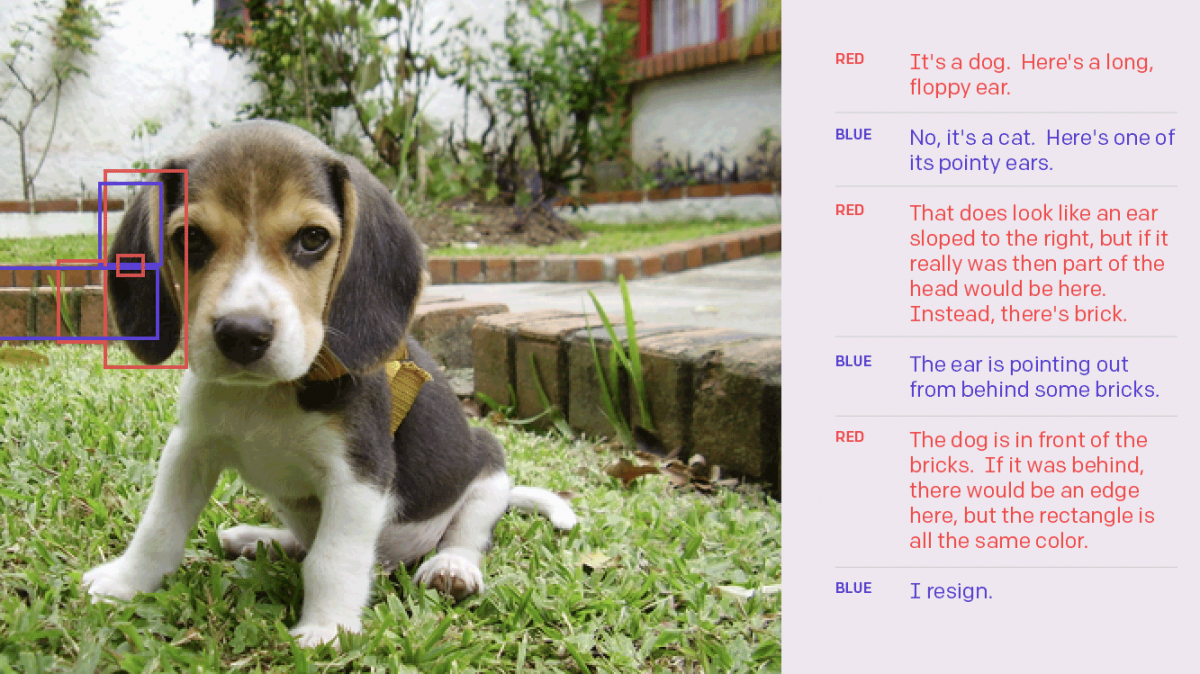
Take, for instance, an AI system designed to defend against human or AI hackers. To prevent the system from doing anything harmful or unethical, it may be necessary to challenge it to explain the logic for a particular action. That logic might be too complex for a person to comprehend, so the researchers suggest having another AI debate the wisdom of the action with the first system, using natural language, while the person observes.

Further details appear in a research paper.

Source: technologyreview.com

Tags :
Share :
comments powered by Disqus

Related Posts

What tech calls “AI” isn’t really AI

What tech calls “AI” isn’t really AI

First, the problem itself is poorly defined: what do you mean by intelligence? Nature, with all her blind hideous strength, endless experimentation and wild wastes of infinite time, has only managed the trick once (by our narrow definition), with one species of tree-ape on a rolling green world. Even if you believe there’s intelligent biological life elsewhere, the stats aren’t promising.

Read More
ONNX expansion speeds AI development

ONNX expansion speeds AI development

Facebook helped develop the Open Neural Network Exchange (ONNX) format to allow AI engineers to more easily move models between frameworks without having to do resource-intensive custom engineering. Today, we’re sharing that ONNX is adding support for additional AI tools, including Apple Core ML converter technology, Baidu’s PaddlePaddle platform, and Qualcomm SNPE.

Read More
We Need Bug Bounties for Bad Algorithms

We Need Bug Bounties for Bad Algorithms

Algorithmic auditors are a growing discipline of researchers specializing in computer science and human-computer interaction. They employ a variety of methods to tinker with and uncover how algorithms work, and their research has already sparked public discussions and regulatory investigations into the most dominant and powerful algorithms of the Information Age. From Uber and Booking.com to Google and Facebook, to name a few, these friendly auditors already uncovered bias and deception in the algorithms that control our lives.

Read More