Swarming Bacteria Create an “Impossible” Superfluid

Swarming Bacteria Create an “Impossible” Superfluid

  • August 8, 2018
Table of Contents

Swarming Bacteria Create an “Impossible” Superfluid

Researchers explore a loophole that extracts useful energy from a fluid’s seemingly random motion. The secret? Sugar and asymmetry.

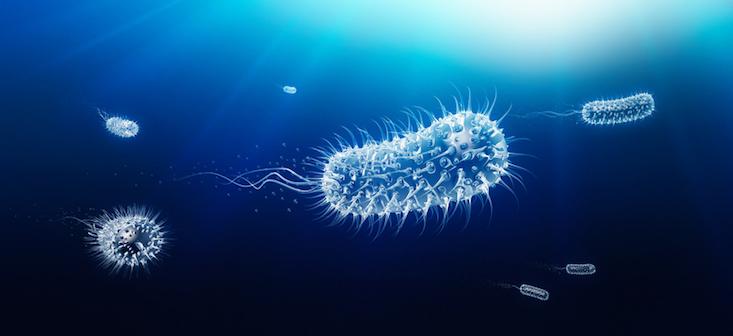
Outside of the imaginations of physics teachers, frictionless devices are hard to come by. But putting a bunch of swimming bacteria into a drop of water achieves just that: a fluid with zero resistance to motion. Incredibly, that resistance (or viscosity, as it’s properly known) can even go negative, creating a self-propelling liquid that might, say, turn a motor in a way that seems to defy the laws of thermodynamics.

Recent work explains how bacteria conspire to pull off the improbable. Physicists have long dreamt of getting something for nothing, even if only in outlandish thought experiments. In the 1860s James Maxwell conjured up an all-knowing demon who could shunt fast air molecules to one side of a room and slow molecules to the other, creating a temperature difference that could power an engine.

With marginally more practicality, in 1962 Richard Feynmanlectured about a microscopic gearthat, when jostled by air molecules, would turn in only one direction, driving a motor. But such ideas are dashed by the Second Law of Thermodynamics, which insists that the sorting or the turning must generate heat that dooms both schemes. As the poet Allen Ginsberg put it, you can’t win, and you can’t break even.

The straightforward conclusion was that the organisms were swimming in a way that neutralized the solution’s internal friction to produce something like a superfluid, a liquid with zero resistance. The apparent thermodynamics violation was an illusion because the bacteria were doing the work to offset or overcome the viscosity.

Source: nautil.us
Share :
comments powered by Disqus

Related Posts

Using CRISPR to edit coral

Using CRISPR to edit coral

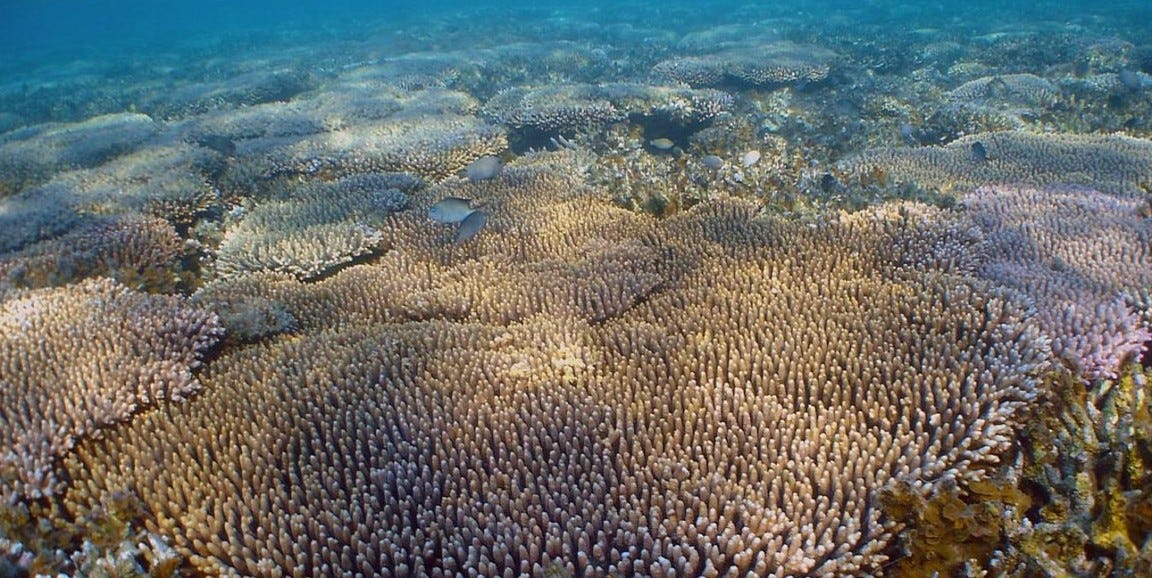
The work was published online in the Proceedings of the National Academy of Sciences. Phillip Cleves, PhD, a postdoctoral scholar at Stanford and coral enthusiast, is first author on the study. Cleves and his collaborators were able to use CRISPR to successfully introduce mutations to three genes (red fluorescent protein, green fluorescent protein and fibroblast growth factor 1a, a gene that is thought to help regulate new coral colonization) in a specific type of coral, Acropora millepora, definitively showing for the first time that the gene-editing technology could be successful in coral species.

Read More
Human blood cells transformed into functional neurons

Human blood cells transformed into functional neurons

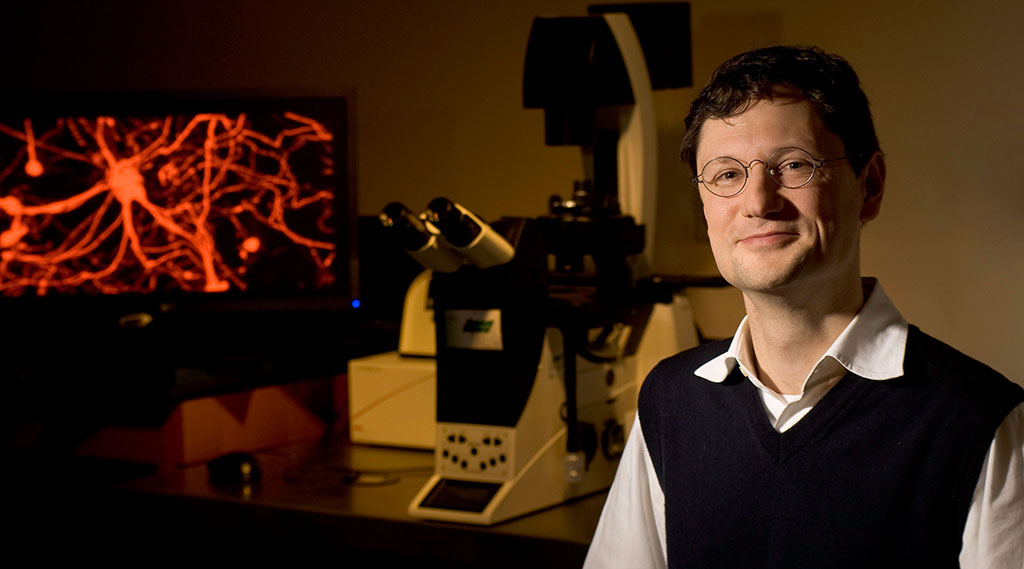
Human immune cells in blood can be converted directly into functional neurons in the laboratory in about three weeks with the addition of just four proteins, researchers at the Stanford University School of Medicine have found. The conversion occurs with relatively high efficiency — generating as many as 50,000 neurons from 1 milliliter of blood — and it can be achieved with fresh or previously frozen and stored blood samples, which vastly enhances opportunities for the study of neurological disorders such as schizophrenia and autism. A paper describing the findings was published online June 4 in the Proceedings of the National Academy of Sciences.

Read More
Muons: the little-known particles helping to probe the impenetrable

Muons: the little-known particles helping to probe the impenetrable

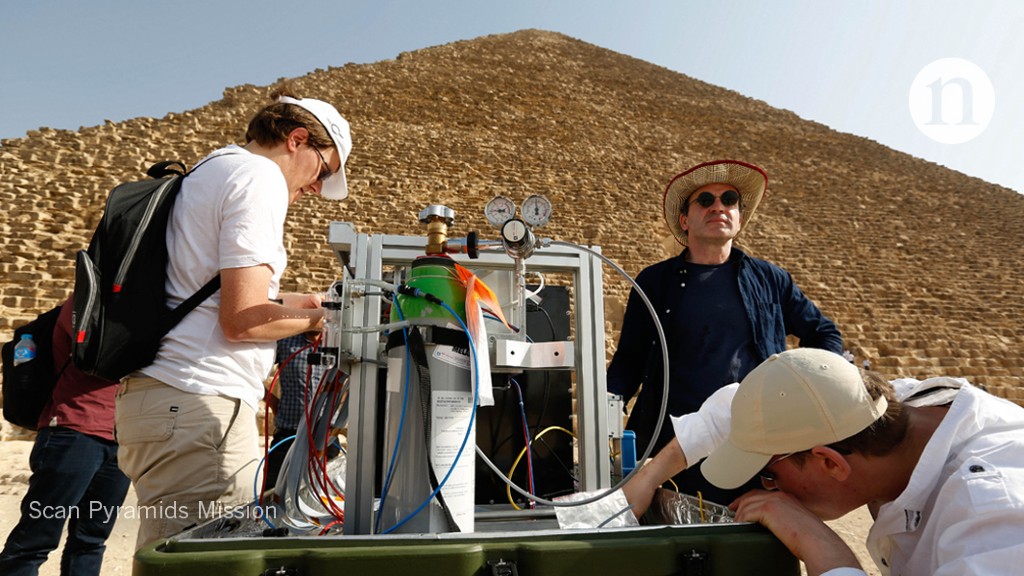
The muon is going mainstream. The particle, a heavy version of the electron that rains down on every square centimetre of Earth, is little known outside particle physics — and last year it helped archaeologists to make a stunning discovery of a previously unknown chamber in Egypt’s Great Pyramid1. Volcanologists and nuclear engineers are also finding new uses for the same technique, called muography, which harnesses muons to probe the innards of dense structures.

Read More