News
- Home /
- News

Some notes about HTTP/3
HTTP/3 is going to be standardized. As an old protocol guy, I thought I’d write up some comments. Google (pbuh) has both the most popular web browser (Chrome) and the two most popular websites (#1 Google.com #2 Youtube.com).
Read More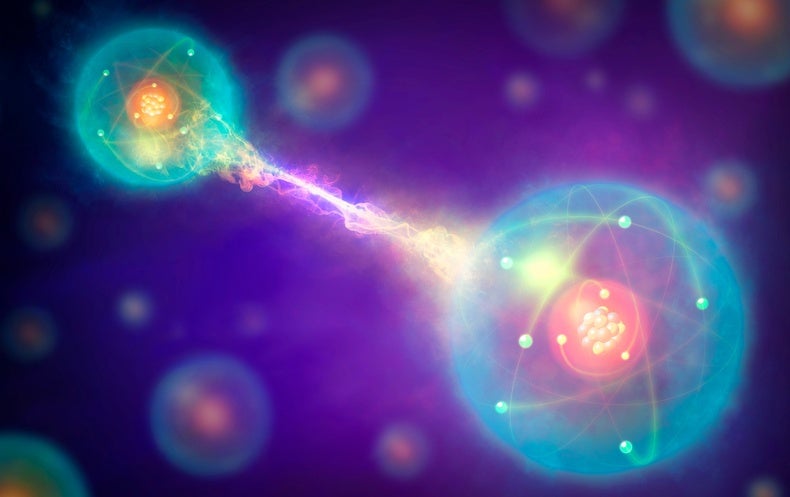
“Schrödinger’s Bacterium” Could Be a Quantum Biology Milestone
The quantum world is a weird one. In theory and to some extent in practice its tenets demand that a particle can appear to be in two places at once—a paradoxical phenomenon known as superposition—and that two particles can become “entangled,” sharing information across arbitrarily large distances through some still-unknown mechanism. Perhaps the most famous example of quantum weirdness is Schrödinger’s cat, a thought experiment devised by Erwin Schrödinger in 1935.
Read More
Alphabet unit halts glucose-detecting contact lens project
Alphabet Inc’s life sciences division Verily said on Friday that it was putting on hold one of its oldest and highest-profile projects, a smart contact lens designed to help monitor sugar levels. The project, started in 2014, aimed to help diabetics better manage their blood sugar levels by embedding sensors on a contact lens to monitor the glucose levels in their tears. In a blog update, Verily cited here insufficient consistency in the correlation between tear glucose and blood glucose concentrations to support the requirements of a medical device.
Read More

Python Data Visualization 2018: Why So Many Libraries?
This post is the first in a three-part series on the state of Python data visualization tools and the trends that emerged from SciPy 2018.By James A. BednarAt a special session of SciPy 2018 in Austin, representatives of a wide range of open-source Python visualization tools shared their visions for the future of data visualization in Python. We heard updates on Matplotlib, Plotly, VisPy, and many more. I attended SciPy 2018 as a representative of PyViz, GeoViews, Datashader, Panel, hvPlot and Bokeh, and my Anaconda colleague Jean-Luc Stevens attended representing HoloViews.
Read More

Decision Tree in Machine Learning
A decision tree is a flowchart-like structure in which each internal node represents a test on a feature (e.g. whether a coin flip comes up heads or tails), each leaf node represents a class label (decision taken after computing all features) and branches represent conjunctions of features that lead to those class labels. The paths from root to leaf represent classification rules. Below diagram illustrate the basic flow of decision tree for decision making with labels (Rain(Yes), No Rain(No)).
Read More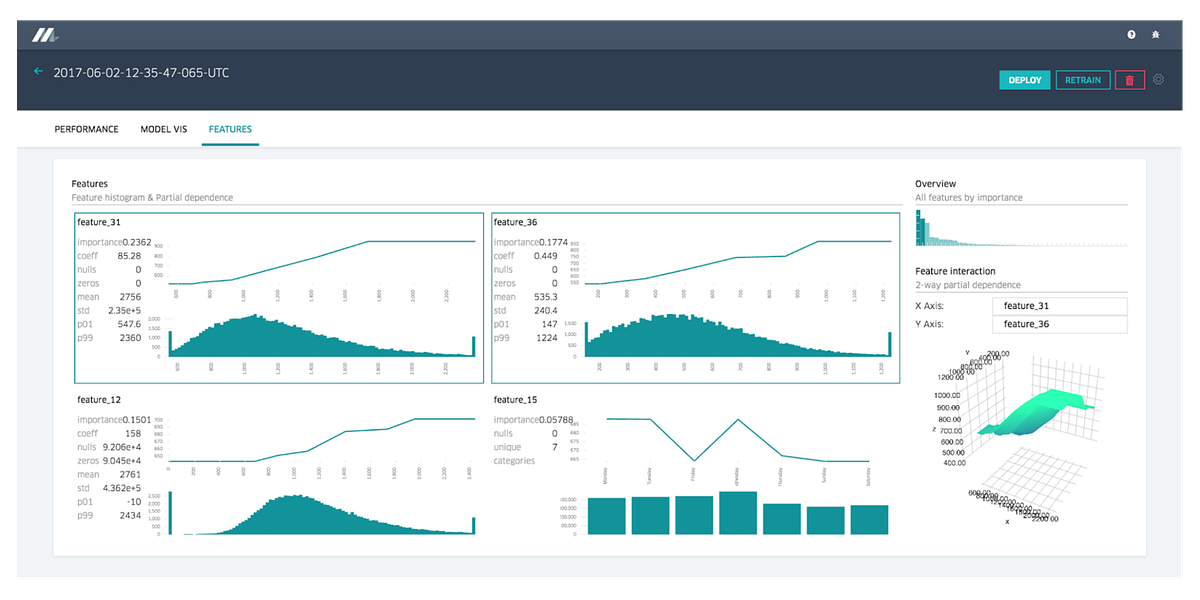
Five Lessons From the First Three Years of Michelangelo
Uber has been one of the most active contributors to open source machine learning technologies in the last few years. While companies like Google or Facebook have focused their contributions in new deep learning stacks like TensorFlow, Caffe2 or PyTorch, the Uber engineering team has really focused on tools and best practices for building machine learning at scale in the real world. Technologies such as Michelangelo, Horovod, PyML, Pyro are some of examples of Uber’s contributions to the machine learning ecosystem.
Read More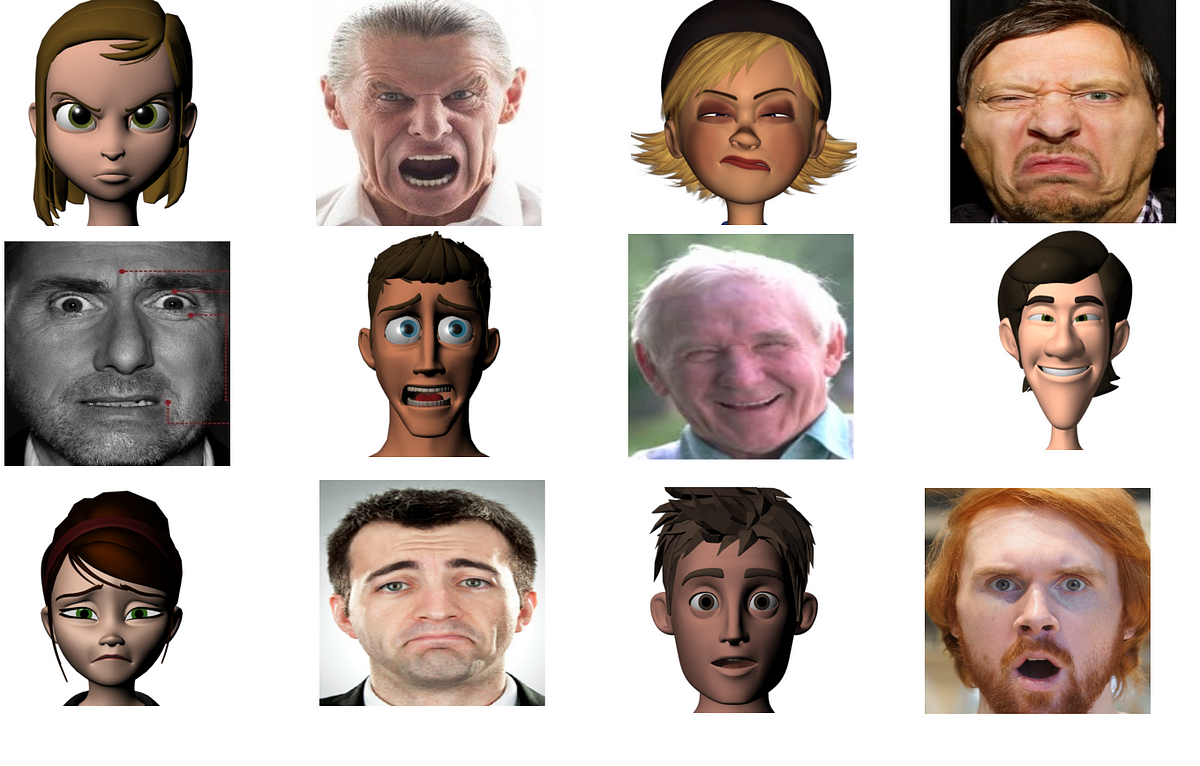
Real Time Facial Expression Recognition
Computer animated agents and robots bring new dimension in human computer interaction which makes it vital as how computers can affect our social life in day-to-day activities. Face to face communication is a real-time process operating at a time scale in the order of milliseconds. The level of uncertainty at this time scale is considerable, making it necessary for humans and machines to rely on sensory rich perceptual primitives rather than slow symbolic inference processes.
Read MoreCategories
Tags
- 3dprinting
- 5g
- Agent
- Agentic
- Ai
- Alexa
- Algorithm
- Amazon
- Ambassador
- Ansible
- Anthropic
- Api
- Apple
- Appmesh
- Appswitch
- Argo
- Art
- Artificialintelligence
- Astronomy
- Augmentedreality
- Aurora
- Australia
- Authentication
- Automation
- Aws
- Azure
- Bayesian
- Bgp
- Bigdata
- Bioengineering
- Biology
- Biotech
- Blackhole
- Blockchain
- Brain
- Build
- Buildah
- Business
- Cancer
- Casestudy
- China
- Chip
- Cia
- Cicd
- Cilium
- Climatechange
- Cloud
- Cloudflare
- Cloudnative
- Cncf
- Codeanalysis
- Computing
- Connectedcars
- Consul
- Container
- Coredns
- Creativity
- Crio
- Crispr
- Cubesat
- Culture
- Dashboard
- Data
- Database
- Datacenter
- Datadog
- Datascience
- Dataset
- Deeplearning
- Deepmind
- Developer
- Development
- Devops
- Digitalcurrency
- Dna
- Dns
- Docker
- Drone
- Ec2
- Economy
- Education
- Einstein
- Eks
- Elasticsearch
- Electricvehicle
- Emdrive
- Energy
- Engineering
- Envoy
- Erlang
- Esa
- Facialrecognition
- Fail
- Falco
- Fashion
- Fda
- Federation
- Fitnessfunction
- Flair
- Fluentd
- Flutter
- Flyingcars
- Food
- Funny
- Gaia
- Gcp
- Gdpr
- Genome
- Geography
- Geopolitics
- Gis
- Git
- Github
- Gitlab
- Gitops
- Gloo
- Go
- Gps
- Grafana
- Graphene
- Graphql
- Grpc
- Hashicorp
- Health
- Healthcare
- Helm
- Hft
- Highavailability
- History
- Http
- Hurricane
- Hyperloop
- Iac
- Ibm
- Image
- Imagerecognition
- Ingress
- Innovation
- Intel
- Ios
- Iot
- Istio
- Jaeger
- Jenkins
- Julia
- Kafka
- Keras
- Kiali
- Kitesurf
- Knative
- Kubedb
- Kubeedge
- Kubernetes
- Lambda
- Latinamerica
- Legal
- Lidar
- Linkerd
- Linux
- Llm
- Lyft
- M3
- Machinelearning
- Mars
- Math
- Mcp
- Microservices
- Microsoft
- Mobile
- Mongo
- Monitoring
- Moon
- Multicloud
- Multicluster
- Mysql
- Nanorobot
- Nasa
- Nature
- Navigation
- Network
- Networking
- Newrelic
- News
- Nextjs
- Nlp
- Nlu
- Observability
- Onnx
- Onpremise
- Opencensus
- Openmetrics
- Opentracing
- Openwhisk
- Operator
- Opinion
- Outage
- Perforce
- Performance
- Pharma
- Philosophy
- Physics
- Podman
- Postgres
- Pprof
- Presto
- Privacy
- Programming
- Prometheus
- Protocol
- Psychology
- Python
- Pytorch
- Qa
- Quantum
- Quantumcomputing
- Qubit
- React
- Recycling
- Redis
- Release
- Renewable
- Research
- Resilience
- Rnn
- Robot
- Rook
- Scalability
- Scaling
- Science
- Secrets
- Security
- Selfdrivingcars
- Sentry
- Serverless
- Servicemesh
- Slack
- Smartgrid
- Smi
- Sociology
- Space
- Spacex
- Spacy
- Spark
- Spinnaker
- Sql
- Squash
- Sre
- Startup
- Storage
- Study
- Success
- Swift
- Sysdig
- Tailwind
- Technology
- Tensorflow
- Terraform
- Tesla
- Testcategory1
- Textclassification
- Traefik
- Training
- Transportation
- Troubleshooting
- Uber
- Ubi
- Vault
- Velero
- Versioncontrol
- Video
- Virtualreality
- Vision
- Visualization
- Vitess
- Warfare
- Wd
- Web
- Weird
- Wikipedia