Anti-anti-communism

Anti-anti-communism

  • March 22, 2018
Table of Contents

Anti-anti-communism

A 2009 poll in eight east European countries asked if the economic situation for ordinary people was ‘better, worse or about the same as it was under communism’. The results stunned observers: 72per cent of Hungarians, and 62per cent of both Ukrainians and Bulgarians believed that most people were worse off after 1989. In no country did more than 47per cent of those surveyed agree that their lives improved after the advent of free markets.

Subsequent polls and qualitative research across Russia and eastern Europe confirm the persistence of these sentiments as popular discontent with the failed promises of free-market prosperity has grown, especially among older people.

Source: aeon.co
Share :
comments powered by Disqus

Related Posts

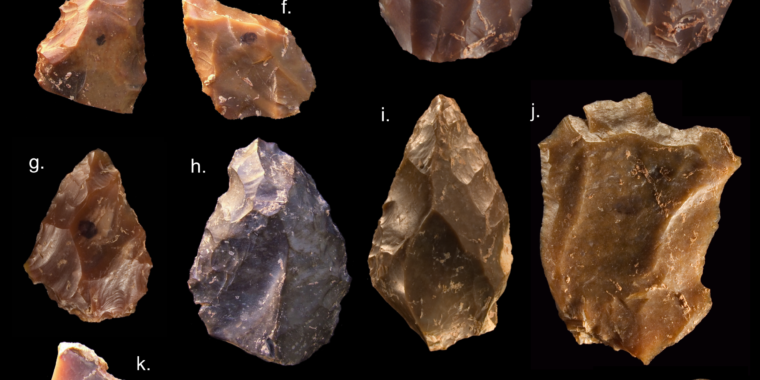
New study tracks the evolution of stone tools

New study tracks the evolution of stone tools

For at least 2.6 million years, humans and our ancestors have been making stone tools by chipping off flakes of material to produce sharp edges. We think of stone tools as very rudimentary technology, but producing a usable tool without wasting a lot of stone takes skill and knowledge. That’s why archaeologists tend to use the complexity of stone tools as a way to measure the cognitive skills of early humans and the complexity of their cultures and social interactions.

Read More
Your Speech Is Packed With Misunderstood, Unconscious Messages

Your Speech Is Packed With Misunderstood, Unconscious Messages

Imagine standing up to give a speech in front of a critical audience. As you do your best to wax eloquent, someone in the room uses a clicker to conspicuously count your every stumble, hesitation, um and uh; once you’ve finished, this person loudly announces how many of these blemishes have marred your presentation.

Read More
Ancient DNA Is Rewriting Human and Neanderthal History

Ancient DNA Is Rewriting Human and Neanderthal History

Geneticist David Reich used to study the living, but now he studies the dead. The precipitating event came in the form of 40,000-year-old Neanderthal bones found in a Croatian cave. So well-preserved were the bones that they yielded enough DNA for sequencing, and it became Reich’s job in 2007 to analyze the DNA for signs that Neanderthals interbred with humans—a idea he was “deeply suspicious” of at the time.

Read More